
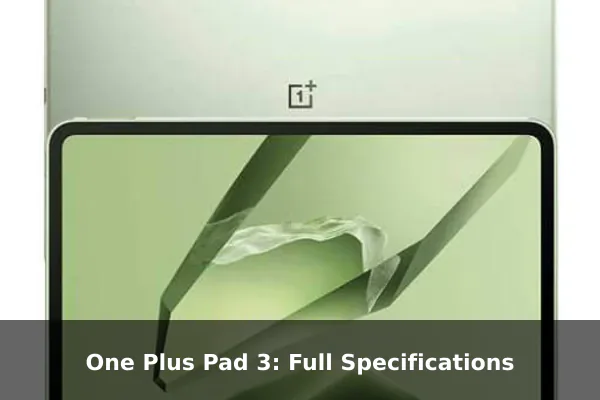
The One Plus Pad 3 is a flagship Android tablet built around a large 13.2-inch display, high-end Snapdragon 8 Elite hardware, and a battery capacity that clearly targets long work and entertainment sessions rather than casual browsing alone.
Unlike many mobile devices in this catalog, its most important detail is what it does not include: cellular connectivity. This is a Wi-Fi-first tablet for users who want a premium screen, strong multitasking performance, stylus support, and fast charging without treating it as a phone replacement.
Full Specifications
Network
| Technology: | No cellular connectivity |
| 2G bands: | N/A |
| 3G bands: | N/A |
| 4G bands: | N/A |
| GPRS: | No |
| EDGE: | No |
Launch
| Announced: | 2025, June 05 |
| Status: | Available. Released 2025, June 19 |
Body
| Dimensions: | 289.6 x 209.7 x 6 mm (11.40 x 8.26 x 0.24 in) |
| Weight: | 675 g (1.49 lb) |
| Build: | Glass front, aluminum frame, aluminum back |
| SIM: | No |
| Stylus support |
Display
| Type: | IPS LCD, 68B colors, Dolby Vision, 144Hz, 900 nits (HBM) |
| Size: | 13.2 inches, 530.0 cm2 (~87.3% screen-to-body ratio) |
| Resolution: | 2400 x 3392 pixels (~315 ppi density) |
Platform
| OS: | Android 15, ColorOS 15 |
| Chipset: | Qualcomm SM8750-AB Snapdragon 8 Elite (3 nm) |
| CPU: | Octa-core (2×4.32 GHz Oryon V2 Phoenix L + 6×3.53 GHz Oryon V2 Phoenix M) |
| GPU: | Adreno 830 |
Memory
| Card slot: | No |
| Internal: | 256GB 12GB RAM, 512GB 16GB RAM |
| UFS 4.0 |
Main Camera
| Single: | 13 MP |
| Features: | Color spectrum sensor, LED flash |
| Video: | 4K@30fps, 1080p@30ps, gyro-EIS |
Selfie camera
| Single: | 8 MP |
| Video: | 1080p@30fps |
Sound
| Loudspeaker: | Yes, with stereo speakers (8 speakers) |
| 3.5mm jack: | No |
| 24-bit/192kHz audio |
Comms
| WLAN: | Wi-Fi 802.11 a/b/g/n/ac/6/7, dual-band |
| Bluetooth: | 5.4, A2DP, LE, aptX HD |
| Positioning: | No |
| NFC: | No |
| Radio: | No |
| USB: | USB Type-C 3.2, OTG, accessory connector |
Features
| Sensors: | Accelerometer, proximity (accessories only), gyro, compass |
Battery
| Type: | 12140 mAh |
| Charging: | 80W wired |
Misc
| Colors: | Storm Blue |
| Models: | OPD2415 |
| Price: | About 600 EUR |
Our Tests
| Loudspeaker: | -23.6 LUFS (Very good) |
| Battery: | Active use score 10:49h |
Price and Availability
The One Plus Pad 3 offers a compelling combination of features and performance. While the base price is around €600, the actual cost may vary depending on your location and retailer. Below, you’ll find the approximate price of the One Plus Pad 3 converted into various currencies. Please note that these are estimates based on recent exchange rates as of October 9, 2026 and may not reflect the exact price you’ll find at a retailer.
- United States: $672
- Japan: ¥106,192
- United Kingdom: £509
- Australia: A$967
- Canada: C$957
- Taiwan: NT$21,469
- Denmark: kr4.485
- Saudi Arabia: ﷼2,522
- South Korea: ₩901,697
- Germany: €600
- Brazil: R$3.372
- Vietnam: ₫17.396.777
- Kenya: KSh 87,984
- India: ₹65,016
- Indonesia: Rp 12.011.389
- Nigeria: ₦906,826
- Pakistan: ₨186,272
- Philippines: ₱42,290
- Bangladesh: ৳৮২,৬৩৮
Why Should You Buy the One Plus Pad 3?
The One Plus Pad 3 makes the most sense for buyers who want a large Android tablet with serious performance headroom. Its Snapdragon 8 Elite chipset, UFS 4.0 storage, and 12GB or 16GB RAM options put it closer to a productivity machine than a simple media slate. The value angle is strongest if you plan to use split-screen apps, drawing tools, browser tabs, video calls, documents, cloud storage, and entertainment on one device.
Its biggest limitation is also easy to understand: there is no SIM support, no 4G, no 5G, no GPS positioning, and no NFC built into the tablet itself. For some users, that will be a deal breaker. For others, especially those who mostly work at home, school, studio desks, cafes, or offices with reliable Wi-Fi, the absence of cellular hardware may not matter much. This is best judged as a premium Wi-Fi tablet, not as an oversized phone.
Design and Build
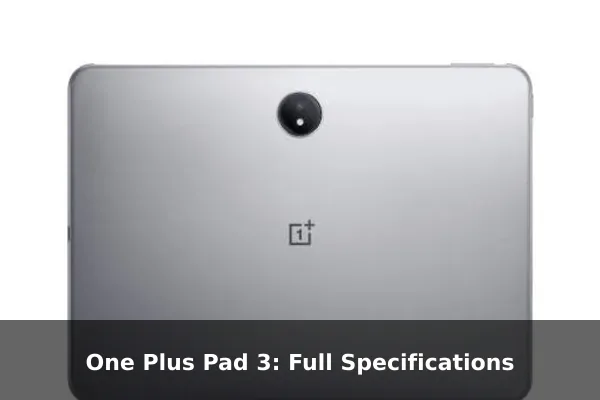
The design is one of the Pad 3’s clearest strengths. It uses a glass front with an aluminum frame and aluminum back, giving it the kind of rigid, premium feel expected from a flagship tablet. At 6 mm thick, it is impressively slim for a 13.2-inch device, although the 675 g weight reminds you that this is still a large-screen product. It is portable enough for a backpack, but it is not a one-hand reading tablet.
The single Storm Blue color keeps the lineup simple. Stylus support is an important addition because the large canvas makes more sense when paired with note-taking, sketching, document markup, and creative apps. Buyers should still check regional accessory bundles carefully, because keyboard and stylus availability can vary by market and retailer.
Display Quality
The 13.2-inch IPS LCD is the headline feature. The 2400 x 3392 resolution gives the panel a sharp pixel density of about 315 ppi, which is excellent for reading, browsing, split-screen work, and watching high-resolution video. The 144Hz refresh rate should make scrolling, pen input, animations, and supported games feel smoother than standard 60Hz tablets.
Support for 68 billion colors, Dolby Vision, and up to 900 nits high-brightness mode gives the display a strong multimedia profile. It is still an IPS LCD rather than OLED, so buyers who prioritize perfect blacks and pixel-level contrast may prefer an OLED tablet. However, the combination of size, resolution, refresh rate, brightness, and color support makes this display highly competitive for productivity and streaming.
Performance and Hardware
Performance should be one of the safest reasons to consider this tablet. The Qualcomm Snapdragon 8 Elite is a flagship 3 nm platform with an octa-core Oryon CPU configuration and Adreno 830 graphics. In practical terms, that means the One Plus Pad 3 is designed for demanding apps, heavier multitasking, high-refresh-rate gaming, media editing, and AI-assisted workflows rather than only basic tablet tasks.
The memory choices also fit that positioning. The 256GB version includes 12GB RAM, while the 512GB version steps up to 16GB RAM. There is no microSD card slot, so the storage decision matters at purchase. Users who keep large offline video libraries, creative project files, RAW images, or many games should lean toward the 512GB model if the price difference is reasonable.
Camera Setup
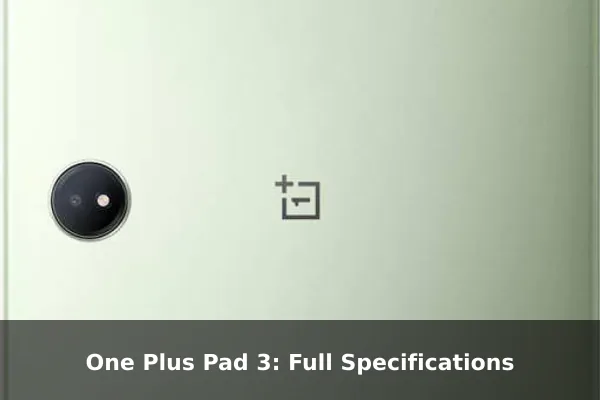
The camera hardware is functional rather than photography-focused. The rear camera is a single 13 MP unit with an LED flash and color spectrum sensor, and it can record up to 4K video at 30fps. Gyro-EIS is useful for casual clips, document captures, and quick scanning, but this is not the device to buy if camera quality is your top priority.
The 8 MP front camera supports 1080p video at 30fps, which is enough for video calls, remote classes, online meetings, and basic selfie use. On a tablet this size, front camera placement and app optimization can matter as much as raw sensor resolution, so buyers should think about how often they will use it in landscape orientation with a keyboard or stand.
Battery Life and Charging
The 12140 mAh battery is one of the strongest specifications on the sheet. A large display and flagship chipset can draw significant power, but the capacity gives the Pad 3 enough room to support long sessions. The reported active use score of 10:49h is a useful sign for mixed usage, while official battery claims should always be read as controlled-test figures rather than guaranteed real-world endurance.
Charging is rated at 80W wired, which is fast for a tablet with this much capacity. That matters because a large battery can otherwise become inconvenient if it needs several hours at the wall. The USB Type-C 3.2 port also adds value for users who move files, connect accessories, or work with external storage through OTG support.
Software and Productivity
The One Plus Pad 3 ships with Android 15 and ColorOS 15, giving it a modern software base for multitasking, app continuity, and tablet-optimized workflows. The official product material highlights multi-app use, OnePlus AI features, Gemini access, and accessory-based productivity, which fits the hardware profile well.
The software experience will matter heavily here because a large Android tablet depends on app scaling, window behavior, keyboard shortcuts, and stylus latency to feel complete. If you already use a OnePlus phone, the ecosystem features may add extra convenience through file sharing and device continuity. If you use another Android phone, Windows laptop, or Mac, check which cross-device features are supported in your region and setup.
Connectivity and Audio
Wireless connectivity is modern, with Wi-Fi 7 support alongside older Wi-Fi standards, dual-band operation, Bluetooth 5.4, A2DP, LE, and aptX HD. For a device without cellular connectivity, strong Wi-Fi support is especially important. The lack of positioning, radio, and NFC keeps the tablet focused on indoor and connected-device use rather than navigation or tap-based mobile features.
Audio is another highlight. The eight-speaker stereo setup and 24-bit/192kHz audio support make the Pad 3 more appealing for movies, games, calls, and music playback. The tested loudspeaker result of -23.6 LUFS is rated very good, which supports the idea that this tablet can work well as a personal media device without immediately needing external speakers.
Who Should Buy It?
Buy the One Plus Pad 3 if you want a big-screen Android tablet for reading, streaming, gaming, notes, drawing, multitasking, and accessory-based productivity. It is particularly attractive for users who care about display size, fast performance, loud speakers, large battery capacity, and a thin metal build.
Skip it if you need mobile data, built-in GPS, expandable storage, a 3.5mm headphone jack, or a camera-first device. It is also less compelling for users who only need a compact tablet for casual reading. The Pad 3 is at its best when treated as a premium workspace and entertainment screen, not as a low-cost tablet or phone substitute.
Conclusion
The One Plus Pad 3 is a powerful Wi-Fi Android tablet with a sharp 13.2-inch 144Hz display, Snapdragon 8 Elite performance, eight speakers, stylus support, a 12140 mAh battery, and 80W charging. Its missing cellular connectivity and expandable storage are important trade-offs, but for buyers who want a premium large-screen tablet for work and media, it is easy to recommend.
References
- OnePlus Pad 3 Specs | OnePlus Canada – Official manufacturer specifications for dimensions, display, chipset, memory, battery, charging, cameras, connectivity, OS, and in-box contents.
- OnePlus Pad 3 | OnePlus United States – Official product page with key feature claims, display and battery notes, charging disclaimers, accessory compatibility, and software feature details.
- OnePlus Pad 3 US/Canada Launch Press Release – Official launch announcement confirming release timing, regional availability, pricing, storage/RAM configuration, update policy, and accessory details.
- OnePlus Pad 3 UK PSTI Statement of Compliance – Official compliance document confirming manufacturer, model name OPD2415, product type, and defined security support period.
- Qualcomm Snapdragon 8 Elite Mobile Platform – Primary chipset reference for the Snapdragon 8 Elite platform used in the OnePlus Pad 3.
