
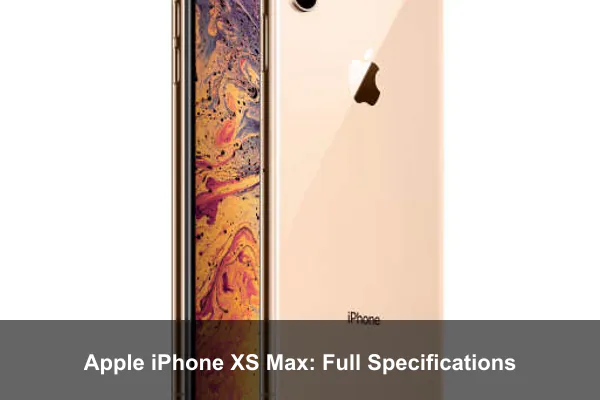
The Apple iPhone XS Max arrived in September 2018 as Apple’s largest and most premium handset of its generation, pairing a sprawling 6.5-inch Super Retina OLED panel with the then-new A12 Bionic chipset. Built from stainless steel and Corning-made glass with IP68 protection, it was the flagship that pushed Apple’s screen sizes into true phablet territory while keeping the polished, no-compromise feel buyers expected from the brand.
Today the XS Max sits in an interesting place. Officially discontinued and now circulating on the second-hand market for around 210 EUR, it offers a genuine Apple flagship experience at a fraction of its original cost. This guide breaks down what that money buys you in 2026 — the strengths that still hold up, the compromises of a seven-year-old design, and who should still consider it.
Full Specifications
Network
| Technology: | GSM / CDMA / HSPA / EVDO / LTE |
| 2G bands: | GSM 850 / 900 / 1800 / 1900 |
| CDMA 800 / 1900 | |
| 3G bands: | HSDPA 850 / 900 / 1700(AWS) / 1900 / 2100 |
| CDMA2000 1xEV-DO | |
| 4G bands: | 1, 2, 3, 4, 5, 7, 8, 12, 13, 14, 17, 18, 19, 20, 25, 26, 28, 29, 30, 32, 34, 38, 39, 40, 41, 46, 66 – A2101 |
| 1, 2, 3, 4, 5, 7, 8, 12, 13, 14, 17, 18, 19, 20, 25, 26, 29, 30, 32, 34, 38, 39, 40, 41, 46, 66, 71 – A1921, A2104 | |
| Speed: | HSPA 42.2/5.76 Mbps, LTE (4CA) Cat16 1024/150 Mbps, EV-DO Rev.A 3.1 Mbps |
Launch
| Announced: | 2018, September 12. Released 2018, September 21 |
| Status: | Discontinued |
Body
| Dimensions: | 157.5 x 77.4 x 7.7 mm (6.20 x 3.05 x 0.30 in) |
| Weight: | 208 g (7.34 oz) |
| Build: | Glass front (Corning-made glass), glass back (Corning-made glass), stainless steel frame |
| SIM: | Nano-SIM + eSIMNano-SIM + Nano-SIM (China) |
| IP68 dust tight and water resistant (immersible up to 2m for 30 min) Apple Pay (Visa, MasterCard, AMEX certified) |
Display
| Type: | Super Retina OLED, HDR10, Dolby Vision, 625 nits (HBM) |
| Size: | 6.5 inches, 102.9 cm2 (~84.4% screen-to-body ratio) |
| Resolution: | 1242 x 2688 pixels, 19.5:9 ratio (~458 ppi density) |
| Protection: | Scratch-resistant glass |
| 3D Touch |
Platform
| OS: | iOS 12, upgradable to iOS 18.6 |
| Chipset: | Apple A12 Bionic (7 nm) |
| CPU: | Hexa-core (2×2.5 GHz Vortex + 4×1.6 GHz Tempest) |
| GPU: | Apple GPU (4-core graphics) |
Memory
| Card slot: | No |
| Internal: | 64GB 4GB RAM, 256GB 4GB RAM, 512GB 4GB RAM |
| NVMe |
Main Camera
| Dual: | 12 MP, f/1.8, 26mm (wide), 1/2.55″, 1.4µm, dual pixel PDAF, OIS 12 MP, f/2.4, 52mm (telephoto), 1/3.4″, 1.0µm, PDAF, OIS, 2x optical zoom |
| Features: | Quad-LED dual-tone flash, HDR (photo/panorama) |
| Video: | 4K@24/30/60fps, 1080p@30/60/120/240fps, HDR, stereo sound rec. |
Selfie camera
| Single: | 7 MP, f/2.2, 32mm (standard) SL 3D, (depth/biometrics sensor) |
| Features: | HDR |
| Video: | 1080p@30/60fps, gyro-EIS |
Sound
| Loudspeaker: | Yes, with stereo speakers |
| 3.5mm jack: | No |
Comms
| WLAN: | Wi-Fi 802.11 a/b/g/n/ac, dual-band, hotspot |
| Bluetooth: | 5.0, A2DP, LE |
| Positioning: | GPS, GLONASS, GALILEO, QZSS |
| NFC: | Yes |
| Radio: | No |
| USB: | Lightning, USB 2.0 |
Features
| Sensors: | Face ID, accelerometer, gyro, proximity, compass, barometer |
Battery
| Type: | Li-Ion 3174 mAh, non-removable (12.08 Wh) |
| Charging: | 15W wired, PD2.0, 50% in 30 min Wireless (Qi) |
Misc
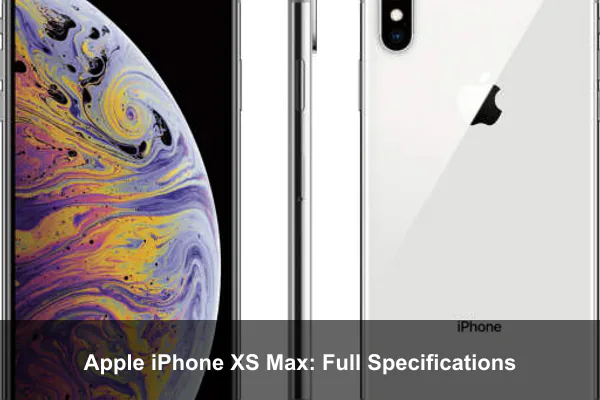
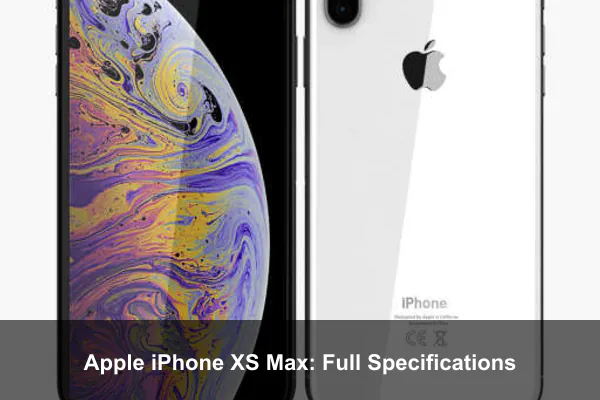
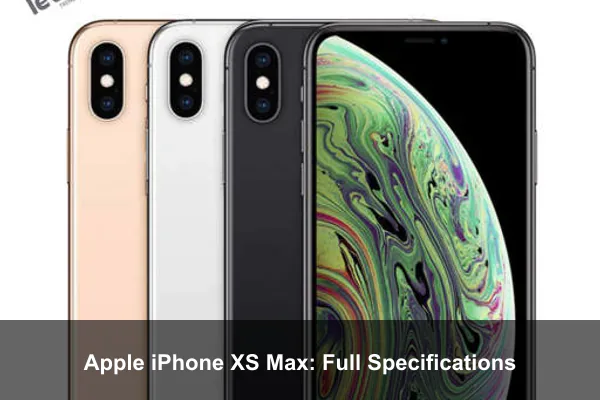
| Colors: | Space Gray, Silver, Gold |
| Models: | A1921, A2101, A2102, A2104, iPhone11,6 |
| SAR: | 1.16 W/kg (head) 1.17 W/kg (body) |
| SAR EU: | 0.99 W/kg (head) 0.99 W/kg (body) |
| Price: | About 210 EUR |
Our Tests
| Performance: | AnTuTu: 353210 (v7) GeekBench: 11432 (v4.4) GFXBench: 47fps (ES 3.1 onscreen) |
| Display: | Contrast ratio: Infinite (nominal), 4.516 (sunlight) |
| Camera: | Photo / Video |
| Loudspeaker: | Voice 70dB / Noise 74dB / Ring 84dB |
| Audio quality: | Noise -93.7dB / Crosstalk -82.8dB |
| Battery (old): | Endurance rating 79h |
Price and Availability
The Apple iPhone XS Max offers a compelling combination of features and performance. While the base price is around €210, the actual cost may vary depending on your location and retailer. Below, you’ll find the approximate price of the Apple iPhone XS Max converted into various currencies. Please note that these are estimates based on recent exchange rates as of June 15, 2026 and may not reflect the exact price you’ll find at a retailer.
- United States: $243
- Japan: ¥38,964
- United Kingdom: £181
- Australia: A$345
- Canada: C$340
- Taiwan: NT$7,702
- Denmark: kr1.567
- Saudi Arabia: ﷼912
- South Korea: ₩369,269
- Germany: €210
- Brazil: R$1.236
- Vietnam: ₫6.377.464
- Kenya: KSh 31,493
- India: ₹23,148
- Indonesia: Rp 4.344.973
- Nigeria: ₦329,927
- Pakistan: ₨67,764
- Philippines: ₱14,756
- Bangladesh: ৳২৯,৯০৩
Is the iPhone XS Max Worth Buying in 2026?
At roughly 210 EUR on the used market, the iPhone XS Max is no longer a top-tier performer, but it remains a credible entry point into the Apple ecosystem. Its standout argument is software longevity: launching on iOS 12 and upgradable all the way to iOS 18.6, it has received years of feature and security updates that most Android rivals from 2018 lost long ago. For a budget-conscious buyer who values a polished, well-supported platform over raw cutting-edge hardware, that update record alone justifies a second look.
Design and Build Quality
The XS Max feels like a flagship in the hand because it was one. The stainless steel frame is sandwiched between Corning-made glass on the front and back, giving it a heft of 208 g and a reassuringly solid 7.7 mm profile. IP68 certification means it survives immersion up to 2 m for 30 minutes, and Apple Pay support with Visa, MasterCard and AMEX certification is baked in. The trade-off is size: at 157.5 x 77.4 mm this is a large, two-hand device, and the glass back demands a case to survive drops. Buyers can choose from Space Gray, Silver and Gold.
A Display That Still Impresses
The 6.5-inch Super Retina OLED screen is arguably the XS Max’s most enduring asset. With a 1242 x 2688 resolution at 458 ppi, HDR10 and Dolby Vision support, and an infinite nominal contrast ratio, it still produces deep blacks and accurate color that embarrass many cheaper modern LCD phones. Peak brightness of 625 nits in high-brightness mode is modest by today’s standards and outdoor visibility (measured around 4.516 in sunlight) is where the age shows, but for video, reading and everyday use the panel remains a genuine pleasure. The 60 Hz refresh rate is the obvious omission compared to current handsets.
Performance and Everyday Speed
The A12 Bionic was a landmark chip, built on a 7 nm process with a hexa-core CPU (2×2.5 GHz Vortex + 4×1.6 GHz Tempest) and a 4-core Apple GPU. Backed by 4GB of RAM and fast NVMe storage in 64GB, 256GB or 512GB capacities, it still handles browsing, messaging, streaming and most apps without complaint. Benchmark figures — AnTuTu around 353,210 and GeekBench 11,432 — look tame next to 2026 silicon, but real-world responsiveness is helped enormously by iOS optimization. Heavier 3D games and demanding pro apps will feel the limits, yet for typical daily tasks the XS Max rarely stutters.
Camera System in Practice
The dual 12 MP rear setup pairs an f/1.8 wide (with OIS and dual pixel PDAF) and an f/2.4 52mm telephoto (also OIS) for 2x optical zoom, supported by a Quad-LED dual-tone flash. Video remains a strength, with 4K capture up to 60fps and stereo sound recording — features that still satisfy casual creators. The front 7 MP f/2.2 camera adds SL 3D depth sensing that powers Face ID and Portrait selfies. Image quality holds up well in good light, though low-light shots and dynamic range lag behind modern computational photography. There is no card slot, so pick your storage capacity carefully.
Battery Life and Charging
A 3174 mAh battery drives the XS Max, earning an endurance rating of 79 hours in its day. In 2026, after years of charge cycles, used units may show degraded capacity, so a battery health check before buying is essential. Charging tops out at 15W wired with PD2.0 (roughly 50% in 30 minutes) and Qi wireless charging is supported. These figures are slow next to current fast-charging phones, but the convenience of wireless top-ups and reliable all-day stamina on a healthy cell still make daily use manageable.
Connectivity and Audio
Connectivity covers the essentials: Wi-Fi 802.11ac dual-band, Bluetooth 5.0, NFC for Apple Pay, and broad 4G LTE band support with Cat16 speeds up to 1024 Mbps. Positioning spans GPS, GLONASS, GALILEO and QZSS. The dual-SIM options (Nano-SIM plus eSIM, or dual Nano-SIM in China) add flexibility. Audio comes through capable stereo speakers, but two omissions stand out for 2026 buyers: there is no 3.5mm headphone jack, and connectivity relies on the aging Lightning and USB 2.0 port rather than USB-C, plus there is no 5G.
Who Should Buy the iPhone XS Max?
This phone makes the most sense for first-time iPhone owners on a tight budget, ecosystem switchers who want a large screen, or anyone needing a dependable secondary device. Its long iOS support, excellent OLED display and solid build punch well above the 210 EUR asking price. It is less suited to power users, mobile gamers, or anyone who needs 5G, fast charging or modern night photography — those buyers should look to a newer mid-range model instead.
Conclusion
The Apple iPhone XS Max remains a compelling budget gateway into Apple’s world, combining a still-gorgeous 6.5-inch OLED, the proven A12 Bionic, premium materials and an exceptional software support record. Its limitations — 60 Hz display, Lightning port, no 5G and slow charging — are real, and a battery health check is non-negotiable on the used market. But for around 210 EUR, it is an easy recommendation for anyone wanting a genuine, well-supported Apple flagship experience without paying flagship prices.
