
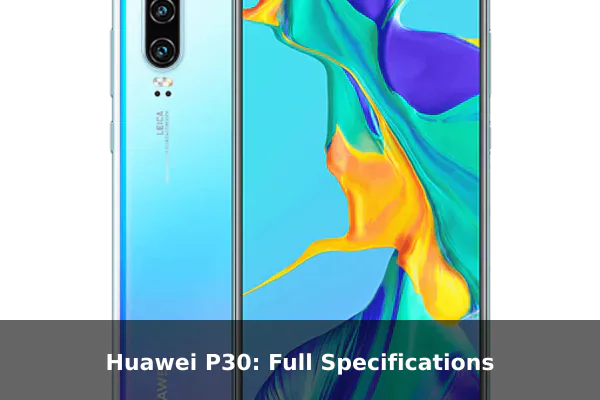
The Huawei P30 remains one of Huawei’s most recognizable compact flagship phones, combining a 6.1-inch OLED display, Kirin 980 hardware, Leica-branded triple cameras, and a slim glass-and-metal body.
This article focuses on the practical meaning behind the Huawei P30 specifications, including where the phone still feels competitive, where it shows its age, and what buyers should check before considering it today.
Full Specifications
Network
| Technology: | GSM / HSPA / LTE |
| 2G bands: | GSM 850 / 900 / 1800 / 1900 |
| 3G bands: | HSDPA 800 / 850 / 900 / 1700(AWS) / 1900 / 2100 |
| 4G bands: | 1, 2, 3, 4, 5, 6, 7, 8, 9, 12, 17, 18, 19, 20, 26, 28, 32, 34, 38, 39, 40 |
| Speed: | HSPA 42.2/5.76 Mbps, LTE Cat21 1400/200 Mbps |
Launch
| Announced: | 2019, March 26. Released 2019, March 26 |
| Status: | Discontinued |
Body
| Dimensions: | 149.1 x 71.4 x 7.6 mm (5.87 x 2.81 x 0.30 in) |
| Weight: | 165 g (5.82 oz) |
| Build: | Glass front (Aluminosilicate glass), glass back (Aluminosilicate glass), aluminum frame |
| SIM: | Nano-SIMNano-SIM + Nano-SIM |
| IP53 dust protected and water resistant (vertical water sprays) |
Display
| Type: | OLED, HDR10 |
| Size: | 6.1 inches, 91.3 cm2 (~85.8% screen-to-body ratio) |
| Resolution: | 1080 x 2340 pixels, 19.5:9 ratio (~422 ppi density) |
Platform
| OS: | Android 9.0 (Pie), upgradable to Android 10, EMUI 10 |
| Chipset: | Kirin 980 (7 nm) |
| CPU: | Octa-core (2×2.6 GHz Cortex-A76 & 2×1.92 GHz Cortex-A76 & 4×1.8 GHz Cortex-A55) |
| GPU: | Mali-G76 MP10 |
Memory
| Card slot: | Nano Memory (uses shared SIM slot) |
| Internal: | 64GB 8GB RAM, 128GB 6GB RAM, 128GB 8GB RAM, 256GB 8GB RAM |
| UFS 2.1 |
Main Camera
| Triple: | 40 MP, f/1.8, 27mm (wide), 1/1.7″, PDAF 8 MP, f/2.4, 80mm (telephoto), 1/4.0″, PDAF, OIS, 3x optical zoom 16 MP, f/2.2, 17mm (ultrawide), PDAF |
| Features: | Laser AF, color spectrum sensor, Leica optics, dual-LED dual-tone flash, panorama, HDR |
| Video: | 4K@30fps, 1080p@60fps, 1080p@30fps (gyro-EIS), 720p@960fps |
Selfie camera
| Single: | 32 MP, f/2.0, 26mm (wide), 1/2.8″, 0.8µm |
| Features: | HDR |
| Video: | 1080p@30fps |
Sound
| Loudspeaker: | Yes |
| 3.5mm jack: | Yes |
| 32-bit/384kHz audio |
Comms
| WLAN: | Wi-Fi 802.11 a/b/g/n/ac, dual-band, Wi-Fi Direct |
| Bluetooth: | 5.0, A2DP, aptX HD, LE |
| Positioning: | GPS (L1+L5), GLONASS (L1), BDS (B1), GALILEO (E1+E5a), QZSS (L1+L5) |
| NFC: | Yes |
| Radio: | No |
| USB: | USB Type-C 3.1 |
Features
| Sensors: | Fingerprint (under display, optical), accelerometer, gyro, proximity, compass |
Battery
| Type: | Li-Po 3650 mAh, non-removable |
| Charging: | 22.5W wired |
Misc
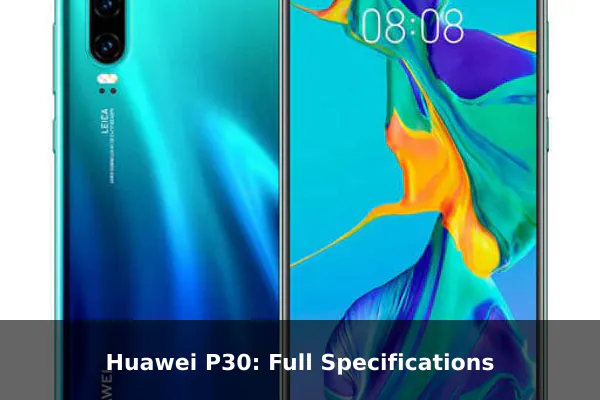
| Colors: | Aurora, Amber Sunrise, Breathing Crystal, Black, Pearl White |
| Models: | ELE-L29, ELE-L09, ELE-AL00, ELE-TL00, ELE-L04 |
| Price: | About 280 EUR |
Our Tests
| Performance: | AnTuTu: 314595 (v7) GeekBench: 10114 (v4.4) GFXBench: 28fps (ES 3.1 onscreen) |
| Display: | 635 nits max brightness (measured) |
| Camera: | Photo / Video |
| Loudspeaker: | Voice 83dB / Noise 75dB / Ring 83dB |
| Audio quality: | Noise -96.2dB / Crosstalk -97.5dB |
| Battery (old): | Endurance rating 83h |
Price and Availability
The Huawei P30 offers a compelling combination of features and performance. While the base price is around €280, the actual cost may vary depending on your location and retailer. Below, you’ll find the approximate price of the Huawei P30 converted into various currencies. Please note that these are estimates based on recent exchange rates as of August 3, 2026 and may not reflect the exact price you’ll find at a retailer.
- United States: $323
- Japan: ¥51,035
- United Kingdom: £240
- Australia: A$459
- Canada: C$453
- Taiwan: NT$10,432
- Denmark: kr2.089
- Saudi Arabia: ﷼1,211
- South Korea: ₩464,179
- Germany: €280
- Brazil: R$1.631
- Vietnam: ₫8.433.455
- Kenya: KSh 41,674
- India: ₹30,739
- Indonesia: Rp 5.809.435
- Nigeria: ₦438,079
- Pakistan: ₨89,664
- Philippines: ₱19,771
- Bangladesh: ৳৩৯,৮৩৭
Value and Market Position
The Huawei P30 launched as a premium phone, but its current appeal is different from a modern flagship. Instead of competing on 5G, ultra-fast charging, or the newest Android version, it is better understood as a compact former flagship with strong cameras, high-end build quality, and a manageable size. The listed source price of about 280 EUR should be treated as historical or market-dependent guidance rather than a guaranteed current retail price, because availability now depends heavily on region, stock condition, and whether the unit is new, refurbished, or used.
For specification-focused buyers, the strongest value points are the OLED display, Kirin 980 chipset, UFS 2.1 storage, telephoto camera, NFC, USB Type-C 3.1, and headphone jack. Those features make it more interesting than many budget phones that may be newer but less complete in camera hardware or materials.
Design and Build
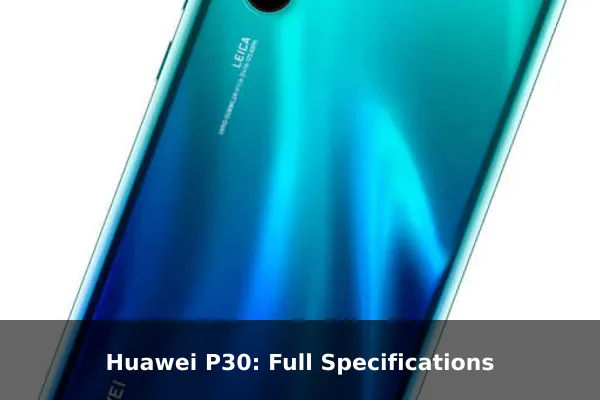
The Huawei P30 is compact by modern standards. Its 149.1 mm height, 7.6 mm thickness, and 165 g weight make it easier to carry than many large-screen phones released after it. The glass front, glass back, and aluminum frame give it a premium feel, while the IP53 rating adds limited protection against dust and vertical water sprays.
IP53 should not be confused with full waterproofing. It is useful for light everyday exposure, but it is not designed for submersion or heavy water pressure. Buyers who prioritize rugged protection should use a case and avoid treating the P30 like a fully water-resistant flagship.
Display Experience
The 6.1-inch OLED panel is one of the Huawei P30’s most important strengths. Its 1080 x 2340 resolution gives sharp image density, and HDR10 support helps with compatible video content. The measured 635-nit maximum brightness from the test data is respectable, especially for a phone from 2019, and should remain usable outdoors in many conditions.
The screen size is also part of the phone’s character. It is large enough for browsing, messaging, maps, and video, but it does not feel oversized. Users who dislike very large modern phones may find the P30 more comfortable than newer devices with 6.7-inch or larger displays.
Performance and Storage
The Kirin 980 was Huawei’s flagship 7 nm chipset, and the benchmark figures in the source data show why the P30 was considered a high-performance phone at launch. It is not positioned against today’s latest flagship processors, but it should still feel capable for common tasks such as messaging, browsing, social apps, navigation, streaming, and moderate gaming.
The storage options are also useful to understand. The P30 was offered with multiple RAM and storage configurations, and it uses UFS 2.1 storage rather than slower basic flash. The Nano Memory card slot adds expansion, but because it uses the shared SIM slot, users may need to choose between extra storage and dual-SIM flexibility.
Camera System
The Huawei P30’s triple rear camera setup is still the main reason many people remember this model. The combination of a 40 MP wide camera, an 8 MP telephoto camera with optical image stabilization and 3x optical zoom, and a 16 MP ultrawide camera gives it more framing flexibility than basic dual-camera phones. Leica optics, Laser AF, a color spectrum sensor, HDR, panorama, and dual-tone flash add to its camera-focused identity.
Video support reaches 4K at 30fps, with 1080p recording options and high-frame-rate 720p slow motion. The 32 MP front camera is also strong on paper for selfies and video calls, though buyers should remember that image processing expectations have changed since 2019. The P30 is best judged as a photography-oriented older flagship, not as a replacement for the most advanced current camera phones.
Battery and Charging
The 3650 mAh battery is moderate by current standards, but the source test result of an 83-hour endurance rating suggests that the P30 was efficient for its generation. The combination of a 7 nm chipset, OLED display, and not-too-large screen helps explain why the battery capacity does not tell the whole story.
Charging is rated at 22.5W wired. That is slower than many newer Android phones, but still practical for routine daily use. There is no wireless charging listed in the provided data, so buyers who rely on wireless pads should treat that as an omission.
Software and Daily Use
The Huawei P30 shipped with Android 9.0 Pie and is listed as upgradable to Android 10 with EMUI 10. That software history matters because it affects app compatibility expectations, interface features, and security update assumptions. Anyone buying the phone now should check the exact software version on the unit before purchase, especially if buying used or imported stock.
The under-display optical fingerprint sensor gives the phone a modern unlocking experience, and the sensor set covers the essentials for navigation, gaming motion controls, orientation, and compass-based apps. The phone also keeps a 3.5 mm headphone jack, which is increasingly uncommon on flagship-class devices.
Connectivity and Audio
The Huawei P30 is a 4G LTE phone, not a 5G device. Its LTE Cat21 rating is fast on paper, and the broad band support makes it more versatile than many region-limited models, but network compatibility still depends on the exact model number and carrier bands. The listed models include ELE-L29, ELE-L09, ELE-AL00, ELE-TL00, and ELE-L04, so checking the variant is important.
Connectivity features include dual-band Wi-Fi ac, Bluetooth 5.0 with aptX HD, NFC, advanced multi-system positioning, and USB Type-C 3.1. The audio package is also notable because it includes a loudspeaker, 32-bit/384kHz audio support, and a headphone jack. The test data shows strong voice and ring loudness figures, which helps its case as a practical everyday phone.
Who Should Buy the Huawei P30?
The Huawei P30 makes the most sense for buyers who want a compact premium Android phone with a good OLED screen, a real telephoto camera, NFC, a headphone jack, and a lighter body than most modern large-screen models. It is also a sensible option for users who value camera versatility more than the latest chipset label.
It is less suitable for buyers who need 5G, guaranteed long-term software support, the fastest charging, wireless charging, or a brand-new battery with full original capacity. As with any discontinued phone, condition matters. A clean unit with a healthy battery and the right regional model can be appealing; a heavily worn unit may erase much of the value advantage.
Conclusion
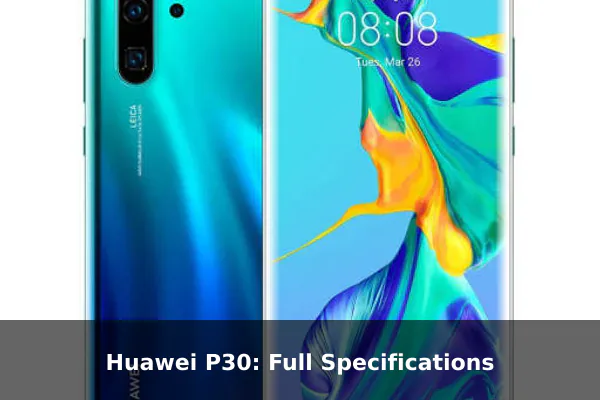
The Huawei P30 is a compact former flagship with a sharp OLED display, capable Kirin 980 performance, flexible Leica triple cameras, NFC, USB-C 3.1, and a headphone jack. Its main compromises are age, discontinued status, 4G-only connectivity, limited water resistance, and older software. Recommended for buyers who want a smaller camera-focused premium phone at the right condition and price.
References
- HUAWEI P30 Specifications – Official Huawei specification page for dimensions, display, processor, memory, cameras, battery, charging, bands, connectivity, sensors, and box contents.
- HUAWEI P30 Support Global – Official Huawei support page useful for confirming the exact product identity, manuals, software support, repair, and service information.
- GSMArena Huawei P30 – Widely used independent phone database for cross-checking specifications, model variants, launch details, network bands, and feature omissions.
- Notebookcheck Huawei P30 – Reputable technical review and specifications source with independent device data, measurements, SAR values, performance context, and review aggregation.
- IEC 60529 IP Code Standard – Official standard reference for explaining the IP53 splash, water, and dust resistance classification cited in Huawei's specifications.
