
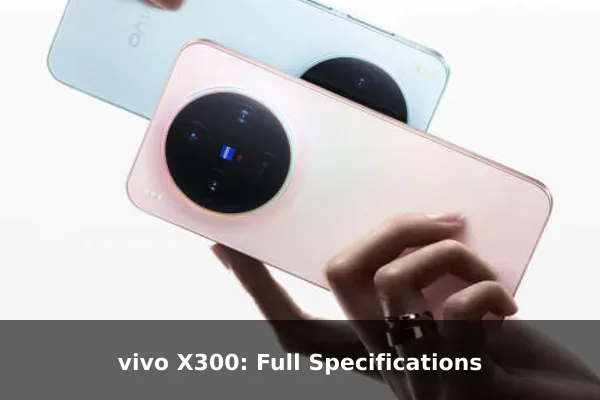
The vivo X300 is the rare modern flagship that keeps the footprint compact while still chasing top-tier hardware. Its 6.31-inch LTPO AMOLED display, Dimensity 9500 chipset, ZEISS-branded triple camera system, and high-capacity silicon-carbon battery place it in a premium lane without turning it into an oversized Ultra-style device.
Announced on October 13, 2025 and released on October 17, 2025, the X300 is best understood as a camera-first compact flagship. The full specifications table will handle every raw band, sensor, memory, and charging detail separately; this article focuses on what those specs mean for real buyers.
Full Specifications
Network
| Technology: | GSM / HSPA / LTE / 5G |
| 2G bands: | GSM 850 / 900 / 1800 / 1900 |
| 3G bands: | HSDPA 850 / 900 / 1700(AWS) / 1900 / 2100 – International |
| HSDPA 850 / 900 / 2100 – Malaysia, India | |
| HSDPA 800 / 850 / 900 / 1700(AWS) / 1900 / 2100 – China | |
| 4G bands: | 1, 2, 3, 4, 5, 7, 8, 18, 19, 20, 25, 26, 28, 34, 38, 39, 40, 41, 42, 43, 48, 66 |
| 5G bands: | 1, 2, 3, 5, 7, 8, 18, 20, 25, 26, 28, 34, 38, 39, 40, 41, 48, 66, 77, 78 SA/NSA/Sub6 |
| Speed: | HSPA, LTE, 5G |
Launch
| Announced: | 2025, October 13 |
| Status: | Available. Released 2025, October 17 |
Body
| Dimensions: | 150.6 x 71.9 x 8 mm (5.93 x 2.83 x 0.31 in) |
| Weight: | 190 g (6.70 oz) |
| Build: | Glass front, aluminum alloy frame, glass back |
| SIM: | · Nano-SIM + Nano-SIM + eSIM (max 2 at a time) – International· Nano-SIM + Nano-SIM – China |
| IP68/IP69 dust tight and water resistant (high pressure water jets; immersible up to 1.5m for 30 min) |
Display
| Type: | LTPO AMOLED, 1B colors, 120Hz, 2160Hz PWM, HDR10+, HDR Vivid, 4500 nits (peak) |
| Size: | 6.31 inches, 98.0 cm2 (~90.5% screen-to-body ratio) |
| Resolution: | 1216 x 2640 pixels, 19.5:9 ratio (~460 ppi density) |
| Protection: | Reinforced Glass, Mohs level 4 |
| Ultra HDR image support |
Platform
| OS: | Android 16, up to 5 major Android upgrades, OriginOS 6 |
| Chipset: | Mediatek Dimensity 9500 (3 nm) |
| CPU: | Octa-core (1×4.21 GHz C1-Ultra & 3×3.5 GHz C1-Premium & 4×2.7 GHz C1-Pro) |
| GPU: | Arm G1-Ultra |
Memory
| Card slot: | No |
| Internal: | 256GB 12GB RAM, 256GB 16GB RAM, 512GB 12GB RAM, 512GB 16GB RAM, 1TB 16GB RAM |
| UFS 4.1 |
Main Camera
| Triple: | 200 MP, f/1.7, 23mm (wide), 1/1.4″, 0.56µm, PDAF, OIS 50 MP, f/2.6, 70mm (periscope telephoto), 1/1.95″, PDAF, OIS, 3x optical zoom 50 MP, f/2.0, 15mm, 119˚ (ultrawide), 1/2.76″, 0.64µm, AF |
| Features: | Laser AF, Zeiss optics, Zeiss T* lens coating, LED flash, panorama, HDR, 3D LUT import |
| Video: | 4K@30/60/120fps, 1080p@30/60/120/240fps, gyro-EIS, 4K@120fps HDR |
Selfie camera
| Single: | 50 MP, f/2.0, 20mm (wide), 1/2.76″, 0.64µm, AF |
| Features: | HDR |
| Video: | 4K@30/60fps, 1080p@30/60fps |
Sound
| Loudspeaker: | Yes, with stereo speakers |
| 3.5mm jack: | No |
Comms
| WLAN: | Wi-Fi 802.11 a/b/g/n/ac/6/7, dual-band |
| Bluetooth: | 5.4, A2DP, LE, aptX HD, LHDC 5 |
| Positioning: | GPS (L1+L5), GLONASS (L1), BDS (B1I+B1c+B2a+B2b), GALILEO (E1+E5a+E5b), QZSS (L1+L5), NavIC (L5) |
| NFC: | Yes |
| Infrared port: | Yes |
| Radio: | No |
| USB: | USB Type-C 3.2, OTG |
Features
| Sensors: | Fingerprint (under display, ultrasonic), accelerometer, gyro, proximity, compass |
Battery
| Type: | · Si/C Li-Ion 6040 mAh (Global)· Si/C Li-Ion 5360 mAh (EU markets) |
| Charging: | 90W wired 40W wireless Reverse wired |
Misc
| Colors: | Phantom Black, Mist Blue, Summit Red, Iris Purple, Halo Pink |
| Models: | V2515, V2509A |
| Price: | € 949.35 / ₹ 75,999 |
Our Tests
| Performance: | AnTuTu: 2346352 (v10), 3416530 (v11) GeekBench: 9843 (v6) 3DMark: 7510 (Wild Life Extreme) |
| Display: | 1930 nits max brightness (measured) |
| Loudspeaker: | -24.8 LUFS (Very good) |
| Battery: | Active use score 17:31h |
EU LABEL
| Energy: | Class A |
| Battery: | 52:15h endurance, 1200 cycles |
| Free fall: | Class B (180 falls) |
| Repairability: | Class C |
Price and Availability
The vivo X300 offers a compelling combination of features and performance. While the base price is around €949, the actual cost may vary depending on your location and retailer. Below, you’ll find the approximate price of the vivo X300 converted into various currencies. Please note that these are estimates based on recent exchange rates as of October 9, 2026 and may not reflect the exact price you’ll find at a retailer.
- United States: $1,064
- Japan: ¥168,022
- United Kingdom: £805
- Australia: A$1,529
- Canada: C$1,514
- Taiwan: NT$33,970
- Denmark: kr7.096
- Saudi Arabia: ﷼3,990
- South Korea: ₩1,426,710
- Germany: €949
- Brazil: R$5.335
- Vietnam: ₫27.526.051
- Kenya: KSh 139,213
- India: ₹1,02,872
- Indonesia: Rp 19.005.021
- Nigeria: ₦1,434,826
- Pakistan: ₨294,729
- Philippines: ₱66,913
- Bangladesh: ৳১,৩০,৭৫৫
Value Position
The vivo X300 sits in a tricky but interesting part of the flagship market: it is not the Pro model, yet it keeps many of the hardware choices that matter most. The Dimensity 9500 platform, UFS 4.1 storage, 120Hz LTPO AMOLED screen, IP68/IP69 protection, wireless charging, and ZEISS camera branding all make it feel closer to a full flagship than a watered-down compact variant. The listed pricing puts it firmly in premium territory, so the value argument depends on whether you want a smaller phone with serious imaging hardware rather than simply the largest display or the biggest battery available.
Its strongest value angle is balance. Many compact phones compromise on cameras, charging, display brightness, or battery capacity. The X300 avoids most of those obvious trade-offs, especially in markets where the 6040 mAh battery version is sold. Buyers should still check local retail pages carefully, because battery capacity, charger-in-box policy, eSIM support, and available storage variants can differ by region.
Design And Durability
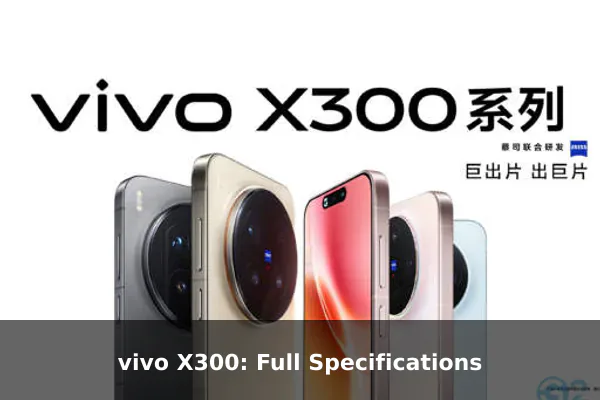
At 150.6 x 71.9 x 8 mm and 190 g, the vivo X300 is compact by current flagship standards without feeling like a small mid-range phone. The glass front, aluminum alloy frame, and glass back give it the expected premium construction, while the color range is broader than the usual black-and-white flagship formula: Phantom Black, Mist Blue, Summit Red, Iris Purple, and Halo Pink.
The durability story is more compelling than the size suggests. IP68/IP69 resistance means the phone is rated for dust-tight protection, immersion, and high-pressure water jets under controlled test conditions. vivo’s official notes still caution that water resistance can reduce with use, which is worth remembering before treating it as a rugged device. The reinforced glass protection is listed at Mohs level 4, so a case and screen protector remain sensible for long-term owners.
Display Experience
The 6.31-inch LTPO AMOLED panel is one of the X300’s defining features. It combines a sharp 1216 x 2640 resolution, around 460 ppi density, a 120Hz refresh rate, 1 billion colors, HDR10+, HDR Vivid, Ultra HDR image support, and 2160Hz PWM dimming. vivo advertises up to 4500 nits peak brightness, while GSMArena’s lab testing measured 1930 nits maximum brightness, which is still excellent for outdoor readability.
The display also fits the phone’s compact identity well. It is large enough for maps, messaging, camera framing, and video playback, but not so wide that one-handed use becomes unrealistic. The high pixel density helps text and camera previews look crisp, while LTPO refresh behavior should help battery efficiency during reading or always-on-style low-motion use.
Performance And Storage
The MediaTek Dimensity 9500 is the performance center of the X300. MediaTek describes the chip as using a third-generation 3 nm process with an all-big-core CPU layout and Arm G1-Ultra graphics, which matches the phone’s flagship positioning. In the supplied test data, the X300 scores 2,346,352 in AnTuTu v10, 3,416,530 in AnTuTu v11, 9,843 in GeekBench v6, and 7,510 in 3DMark Wild Life Extreme.
Those numbers point to a phone built for heavy multitasking, high-resolution camera processing, and demanding games. The storage setup also helps: every listed variant uses UFS 4.1, with configurations running from 256GB with 12GB RAM up to 1TB with 16GB RAM. There is no microSD slot, so buyers who shoot a lot of 4K video should choose storage capacity carefully at purchase.
Camera System
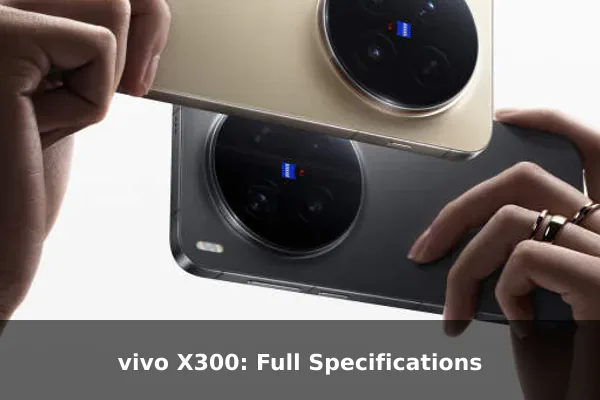
The X300’s camera setup is its clearest reason to exist. The rear system combines a 200 MP wide camera with OIS, a 50 MP 3x periscope telephoto camera with OIS, and a 50 MP autofocus ultrawide. ZEISS optics, ZEISS T* coating, Laser AF, HDR, panorama, and 3D LUT import all point toward a phone designed for people who edit and compare images, not just casual point-and-shoot use.
The 200 MP main camera gives the phone flexibility for detail-heavy shots and cropping. The 70 mm periscope camera is useful for portraits, stage shots, compression, and cleaner framing from a distance, while the autofocus ultrawide should be more useful than fixed-focus ultrawides for close subjects. Video support is also ambitious, with up to 4K at 120fps, gyro-EIS, and HDR recording at 4K/120fps. The front camera is unusually strong too: 50 MP with autofocus and 4K video, making the X300 attractive for vloggers and video callers who care about sharp self-facing footage.
Battery And Charging
Battery capacity is one of the most important details to verify before buying the vivo X300. The supplied data lists a 6040 mAh silicon-carbon Li-Ion battery for the global version and a 5360 mAh unit for EU markets. vivo’s own parameter page also separates a 6040 mAh overseas capacity from a 5360 mAh capacity for certain European listings, so local stock can matter more than the model name alone.
Charging is strong either way. The phone supports 90W wired charging, 40W wireless charging, and reverse wired charging. In the supplied test data, the X300 posts a 17:31h active use score, while the EU label data lists Class A energy efficiency, 52:15h endurance, 1200 cycles, Class B free-fall reliability, and Class C repairability. For a compact flagship, that is a reassuring combination: fast charging for busy days, plus enough endurance on paper to avoid constant topping up.
Software And Updates
The vivo X300 ships with Android 16 and OriginOS 6, with support listed for up to five major Android upgrades. That gives the phone a stronger long-term software story than older vivo flagships that often felt more region-dependent in software expectations. OriginOS 6 also matters because vivo is positioning it around smoother visuals, multitasking tools, and ecosystem features such as file transfer and office-style continuity.
As always, software experience can vary by region, especially between China, India, Europe, and wider international firmware builds. Buyers who depend on Android Auto, banking apps, eSIM, notification behavior, or Google service compatibility should confirm the exact regional model before importing.
Connectivity And Daily Features
The connectivity package is broad. The X300 supports GSM, HSPA, LTE, and 5G with extensive sub-6GHz band coverage, plus Wi-Fi 7, Bluetooth 5.4, NFC, infrared, USB Type-C 3.2 with OTG, and multi-constellation positioning including GPS, GLONASS, BDS, Galileo, QZSS, and NavIC. Stereo speakers are included, and the supplied test data rates loudspeaker output at -24.8 LUFS, described as very good.
The omissions are predictable for a modern premium phone: there is no 3.5 mm headphone jack and no microSD expansion. The ultrasonic under-display fingerprint sensor is a welcome premium touch, especially compared with slower optical implementations. Dual SIM and eSIM support depend on market version, with the international model supporting Nano-SIM + Nano-SIM + eSIM but only two active lines at a time.
Who Should Buy The vivo X300?
The vivo X300 makes the most sense for buyers who want a compact Android flagship with a serious camera system. It is especially compelling if you care about portrait focal lengths, high-resolution main-camera detail, 4K selfie video, bright display quality, and fast wired plus wireless charging. It is also a good fit for users who dislike oversized phones but do not want to step down to mid-range performance.
It is less ideal for buyers who need expandable storage, a headphone jack, the absolute largest display, or guaranteed identical battery capacity across regions. Import buyers should be particularly careful: model numbers, network bands, charger contents, eSIM behavior, warranty support, and battery capacity can differ depending on the sales channel.
References
Reference sources include vivo’s official X300 product page, vivo’s official X300 parameter page, MediaTek’s official Dimensity 9500 information, GSMArena’s vivo X300 review and lab-test pages, and European Union energy-label documentation for smartphone label context: vivo X300 official page, vivo X300 parameters, MediaTek Dimensity 9500, GSMArena vivo X300 review, and EU smartphone energy-label regulation.
Conclusion
The vivo X300 is a compact flagship with unusually few hardware compromises: a bright LTPO display, Dimensity 9500 performance, ZEISS-backed cameras, premium charging, and strong durability ratings. Choose it if you want a smaller Android flagship built around cameras and battery confidence; skip it only if expandable storage, a headphone jack, or the largest possible screen matters more.
