
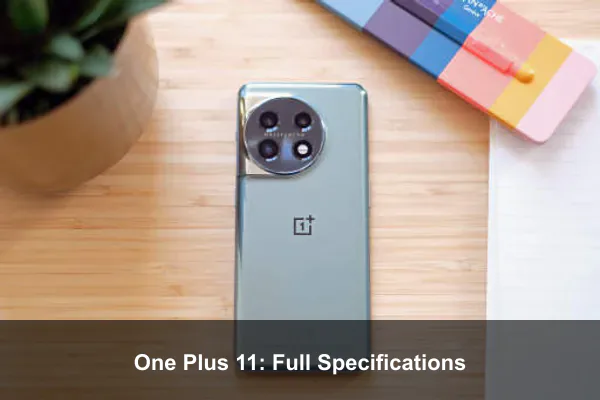
The One Plus 11 marked One Plus returning to a flagship formula that put raw speed, a fast-charging battery, and a Hasselblad-tuned camera ahead of gimmicks. Announced in January 2023, it pairs the Snapdragon 8 Gen 2 with a sharp 6.7-inch LTPO3 AMOLED panel, making it one of the most balanced high-end phones of its generation at a price that undercut most rivals.
This article looks at how the One Plus 11 holds up as a complete package, breaking down what each part of the spec sheet means in everyday use. Rather than repeating numbers, the sections below explain where the phone shines, where it cuts corners, and which type of buyer gets the most out of it.
Full Specifications
Network
| Technology: | GSM / CDMA / HSPA / EVDO / LTE / 5G |
| 2G bands: | GSM 850 / 900 / 1800 / 1900 |
| CDMA 800 | |
| 3G bands: | HSDPA 800 / 850 / 900 / 1700(AWS) / 1900 / 2100 |
| CDMA2000 1xEV-DO | |
| 4G bands: | 1, 2, 3, 4, 5, 7, 8, 12, 13, 17, 18, 19, 20, 25, 26, 28, 30, 32, 38, 39, 41, 40, 46, 48, 66, 71 – International |
| 1, 2, 3, 4, 5, 7, 8, 12, 17, 18, 19, 20, 26, 28, 34, 38, 39, 40, 41, 66 – China | |
| 5G bands: | 1, 2, 3, 5, 7, 8, 20, 25, 28, 30, 38, 40, 41, 66, 71, 75, 77, 78 SA/NSA – International |
| 1, 3, 5, 7, 8, 20, 28, 38, 40, 41, 66, 77, 78 SA/NSA – China | |
| Speed: | HSPA, LTE (CA), 5G |
Launch
| Announced: | 2023, January 04 |
| Status: | Available. Released 2023, January 09 |
Body
| Dimensions: | 163.1 x 74.1 x 8.5 mm (6.42 x 2.92 x 0.33 in) |
| Weight: | 205 g (7.23 oz) |
| Build: | Glass front (Gorilla Glass Victus), glass back (Gorilla Glass 5), aluminum frame |
| SIM: | Nano-SIMNano-SIM + Nano-SIM + eSIM (max 2 at a time) |
| IP64 dust tight and water resistant (water splashes) |
Display
| Type: | LTPO3 Fluid AMOLED, 1B colors, 120Hz, Dolby Vision, HDR10+, 500 nits (typ), 800 nits (HBM), 1300 nits (peak) |
| Size: | 6.7 inches, 108.4 cm2 (~89.7% screen-to-body ratio) |
| Resolution: | 1440 x 3216 pixels, 20:9 ratio (~525 ppi density) |
| Protection: | Corning Gorilla Glass Victus |
Platform
| OS: | Android 13, upgradable to Android 15, OxygenOS 15 (International), ColorOS 14 (China) |
| Chipset: | Qualcomm SM8550-AB Snapdragon 8 Gen 2 (4 nm) |
| CPU: | Octa-core (1×3.2 GHz Cortex-X3 & 2×2.8 GHz Cortex-A715 & 2×2.8 GHz Cortex-A710 & 3×2.0 GHz Cortex-A510) |
| GPU: | Adreno 740 |
Memory
| Card slot: | No |
| Internal: | 128GB 8GB RAM, 256GB 12GB RAM, 256GB 16GB RAM, 512GB 16GB RAM |
| UFS 3.1 – 128GB only UFS 4.0 |
Main Camera
| Triple: | 50 MP, f/1.8, 24mm (wide), 1/1.56″, 1.0µm, multi-directional PDAF, OIS 32 MP, f/2.0, 48mm (telephoto), 1/2.74″, PDAF, 2x optical zoom 48 MP, f/2.2, 115˚, (ultrawide), 1/2.0″, AF |
| Features: | Hasselblad Color Calibration, color spectrum sensor, Dual-LED flash, HDR, panorama |
| Video: | 8K@24fps, 4K@30/60fps, 1080p@30/60/240fps, Auto HDR, gyro-EIS |
Selfie camera
| Single: | 16 MP, f/2.5, 25mm (wide), 1.0µm |
| Features: | HDR, panorama |
| Video: | 1080p@30fps, gyro-EIS |
Sound
| Loudspeaker: | Yes, with stereo speakers |
| 3.5mm jack: | No |
| 24-bit/192kHz Hi-Res audio |
Comms
| WLAN: | Wi-Fi 802.11 a/b/g/n/ac/6/7, dual-band, Wi-Fi Direct |
| Bluetooth: | 5.3, A2DP, LE, aptX HD |
| Positioning: | GPS (L1+L5), GLONASS (G1), BDS (B1I+B1c+B2a), GALILEO (E1+E5a), QZSS (L1+L5) |
| NFC: | Yes |
| Radio: | No |
| USB: | USB Type-C 2.0, OTG |
Features
| Sensors: | Fingerprint (under display, optical), accelerometer, gyro, proximity, compass |
Battery
| Type: | Li-Po 5000 mAh |
| Charging: | 100W wired, PD, 50% in 10 min, 100% in 25 min – International 80W wired, PD – USA |
Misc
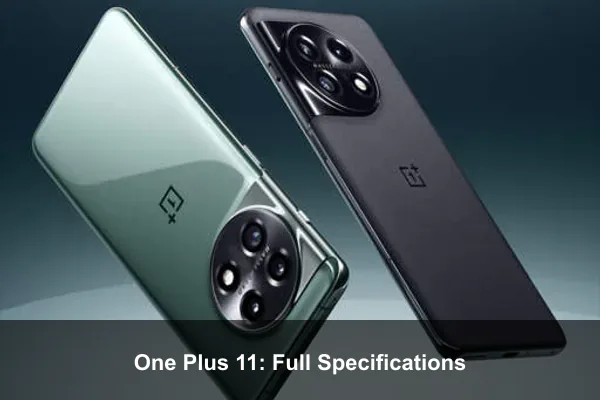
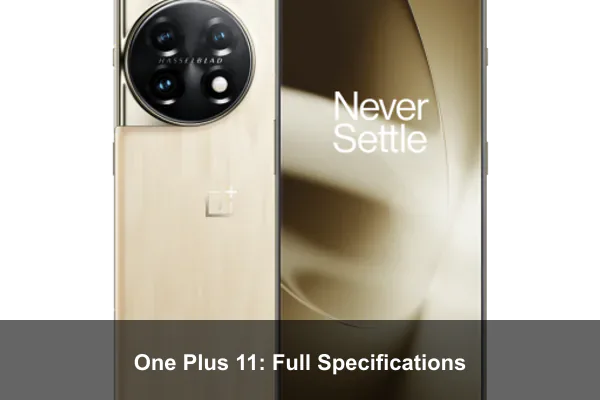
| Colors: | Titan Black, Eternal Green, Jupiter Rock |
| Models: | PHB110, CPH2449, CPH2447, CPH2451 |
| SAR: | 1.19 W/kg (head) 0.99 W/kg (body) |
| Price: | € 525.28 / $ 499.95 / £ 345.25 / ₹ 39,890 |
Our Tests
| Performance: | AnTuTu: 1140661 (v9) GeekBench: 4899 (v5.1) GFXBench: 57fps (ES 3.1 onscreen) |
| Display: | 767 nits max brightness (measured) |
| Camera: | Photo / Video |
| Loudspeaker: | -25.2 LUFS (Very good) |
| Battery: | Active use score 11:05h |
| Battery (old): | Endurance rating 108h |
Price and Availability
The One Plus 11 offers a compelling combination of features and performance. While the base price is around €525, the actual cost may vary depending on your location and retailer. Below, you’ll find the approximate price of the One Plus 11 converted into various currencies. Please note that these are estimates based on recent exchange rates as of June 17, 2026 and may not reflect the exact price you’ll find at a retailer.
- United States: $610
- Japan: ¥97,791
- United Kingdom: £454
- Australia: A$863
- Canada: C$853
- Taiwan: NT$19,211
- Denmark: kr3.920
- Saudi Arabia: ﷼2,287
- South Korea: ₩919,995
- Germany: €525
- Brazil: R$3.088
- Vietnam: ₫15.940.481
- Kenya: KSh 78,865
- India: ₹57,673
- Indonesia: Rp 10.795.707
- Nigeria: ₦822,435
- Pakistan: ₨169,761
- Philippines: ₱36,754
- Bangladesh: ৳৭৪,৮৮২
Why the One Plus 11 Is Worth Considering
The biggest argument for the One Plus 11 is value. It delivers a true 2023 flagship chipset, a 1440p 120Hz display, and 100W charging for a launch price that sat closer to upper mid-range territory. AnTuTu scores past 1.14 million and a Geekbench result near 4,900 confirm that this phone competes with devices costing considerably more, which is rare in a market where flagship pricing keeps climbing.
Design and Build Quality
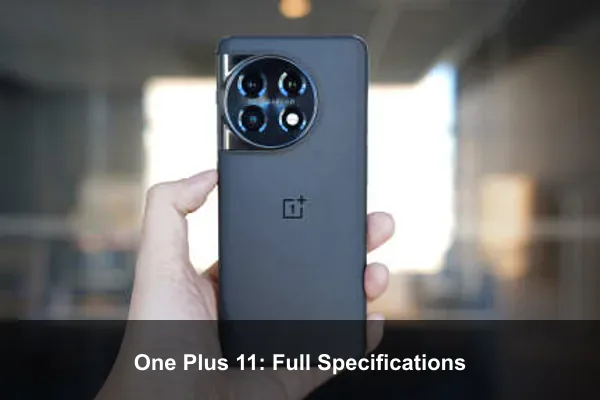
At 163.1 x 74.1 x 8.5 mm and 205 g, the One Plus 11 feels substantial but well balanced. The sandwich of Gorilla Glass Victus up front, Gorilla Glass 5 on the back, and an aluminum frame gives it a premium hand-feel, while the distinctive circular Hasselblad camera island makes it instantly recognizable. The main caveat is the IP64 rating: it survives dust and splashes, but it is not built for full immersion like IP68 rivals.
Display Experience
The 6.7-inch LTPO3 Fluid AMOLED screen is a highlight. With a 1440 x 3216 resolution (~525 ppi), a 120Hz adaptive refresh rate, and support for Dolby Vision and HDR10+, content looks crisp and fluid. Peak brightness is rated at 1300 nits, though our measured figure of around 767 nits means it is comfortable indoors and usable outdoors rather than class-leading under direct sun.
Performance and Gaming
Powered by the 4 nm Snapdragon 8 Gen 2 with the Adreno 740 GPU, the One Plus 11 handles everything from heavy multitasking to demanding 3D games with ease. Configurations scale up to 16GB of RAM and 512GB of storage, and the move to UFS 4.0 on higher-tier models keeps app loading and file transfers snappy. Sustained gaming stays smooth, with a GFXBench result of 57fps in onscreen testing.
Camera System
The Hasselblad-calibrated triple camera leads with a 50 MP wide sensor with OIS, joined by a 32 MP 2x telephoto and a 48 MP ultrawide. Color tuning is the standout, producing natural, consistent tones across lenses. Video tops out at 8K@24fps, with stabilized 4K@60fps for everyday clips. The 16 MP selfie camera is competent rather than spectacular, capturing clean shots in good light.
Battery Life and Charging
A 5000 mAh battery delivers strong endurance, reflected in an active-use score of just over 11 hours. The real party trick is charging: 100W wired refills the cell to 50% in about 10 minutes and to full in roughly 25 minutes (80W in the USA). For users who hate waiting on a charger, few phones at this price match that turnaround.
Software and Connectivity
The One Plus 11 shipped with Android 13 and OxygenOS, and is upgradable to Android 15, giving it a respectable update runway. Connectivity is comprehensive: Wi-Fi 7, Bluetooth 5.3 with aptX HD, NFC, broad 5G band support, and dual stereo speakers with Hi-Res audio. The main omissions are a microSD slot, a 3.5mm jack, and faster USB, with the port limited to USB 2.0 speeds.
Who Should Buy the One Plus 11
This phone suits buyers who want flagship-class speed and charging without paying ultra-premium prices. It is ideal for gamers, power users, and anyone upgrading from an older mid-range device. Shoppers who need full waterproofing, the absolute best telephoto reach, or wireless charging may want to look elsewhere, but for everyone else the value is hard to beat.
Conclusion
The One Plus 11 remains a smart pick for performance-focused buyers who refuse to overpay. Its Snapdragon 8 Gen 2 power, vivid 120Hz display, rapid 100W charging, and Hasselblad-tuned cameras add up to a flagship experience with very few real compromises. If you can live without wireless charging and an IP68 rating, the One Plus 11 is one of the easiest value-flagship recommendations of its era.
