
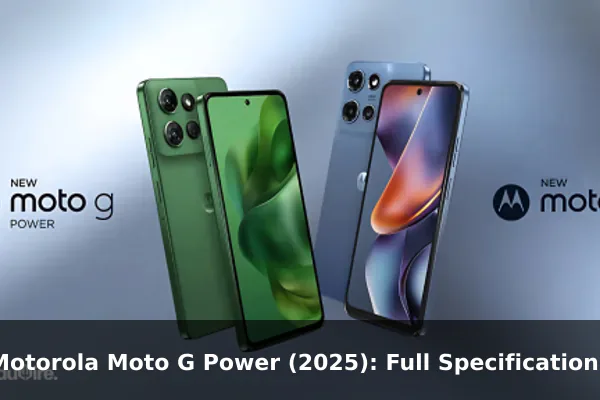
The Motorola Moto G Power (2025) is a budget 5G Android phone built around endurance, durability, and everyday practicality rather than headline-chasing flagship extras. Its standout mix includes a large 120Hz display, a 5000mAh battery, wireless charging, expandable storage, stereo speakers, and serious dust and water resistance.
This article looks at the Moto G Power (2025) from a value-first angle: how its hardware choices work together, where it feels stronger than a typical low-cost phone, and what buyers should know before choosing it over slimmer, faster, or camera-focused alternatives.
Full Specifications
Network
| Technology: | GSM / HSPA / LTE / 5G |
| 2G bands: | GSM 850 / 900 / 1800 / 1900 |
| 3G bands: | HSDPA 850 / 900 / 1700(AWS) / 1900 / 2100 |
| 4G bands: | 1, 2, 3, 4, 5, 7, 8, 12, 13, 14, 17, 18, 20, 25, 26, 28, 29, 30, 38, 39, 40, 41, 48, 66, 71 |
| 5G bands: | 2, 5, 7, 12, 14, 25, 26, 29, 30, 41, 48, 66, 70, 71, 77, 78 SA/NSA/Sub6 |
| Speed: | HSPA, LTE, 5G |
Launch
| Announced: | 2025, January 14 |
| Status: | Available. Released 2025, February 06 |
Body
| Dimensions: | 166.6 x 77.1 x 8.7 mm (6.56 x 3.04 x 0.34 in) |
| Weight: | 208 g (7.34 oz) |
| Build: | Glass front (Gorilla Glass 5), silicone polymer (eco leather) back, plastic frame |
| SIM: | Nano-SIM + eSIM |
| IP68/IP69 dust tight and water resistant (high pressure water jets; immersible up to 1.5m for 30 min) MIL-STD-810H compliant* * does not guarantee ruggedness or use in extreme conditions |
Display
| Type: | IPS LCD, 120Hz |
| Size: | 6.8 inches, 112.0 cm2 (~87.2% screen-to-body ratio) |
| Resolution: | 1080 x 2388 pixels (~385 ppi density) |
| Protection: | Corning Gorilla Glass 5 |
Platform
| OS: | Android 15, up to 2 major Android upgrades |
| Chipset: | Mediatek Dimensity 6300 (6 nm) |
| CPU: | Octa-core (2×2.4 GHz Cortex-A76 & 6×2.0 GHz Cortex-A55) |
| GPU: | Mali-G57 MC2 |
Memory
| Card slot: | microSDXC (dedicated slot) |
| Internal: | 128GB 8GB RAM |
Main Camera
| Dual: | 50 MP, f/1.8, (wide), 1/2.88″, 0.61µm, PDAF, OIS 8 MP, f/2.2, 119˚ 13mm (ultrawide), 1.12µm, AF |
| Features: | LED flash, HDR, panorama |
| Video: | 1080p@30fps |
Selfie camera
| Single: | 16 MP, f/2.4, 24mm (wide), 1/3.0″, 1.0µm |
| Video: | 1080p@30fps |
Sound
| Loudspeaker: | Yes, with stereo speakers (with Dolby Atmos) |
| 3.5mm jack: | Yes |
Comms
| WLAN: | Wi-Fi 802.11 a/b/g/n/ac, dual-band |
| Bluetooth: | Yes |
| Positioning: | GPS, GALILEO, GLONASS |
| NFC: | Yes |
| Radio: | FM radio |
| USB: | USB Type-C 2.0 |
Features
| Sensors: | Fingerprint (side-mounted), accelerometer, gyro, proximity, compass, barometer |
Battery
| Type: | 5000 mAh |
| Charging: | 30W wired 15W wireless |
Misc
| Colors: | Slate Gray, Leaf Green |
| Models: | XT2515-1 |
| Price: | $ 189.95 |
Our Tests
| Performance: | AnTuTu: 440530 (v10) GeekBench: 2090 (v6) 3DMark: 383 (Wild Life Extreme) |
| Display: | 1358:1 contrast ratio, 993 nits max brightness (measured) |
| Loudspeaker: | -22.3 LUFS (Excellent) |
| Battery: | Active use score 11:56h |
Price and Availability
The Motorola Moto G Power (2025) offers a compelling combination of features and performance. While the base price is around $190, the actual cost may vary depending on your location and retailer. Below, you’ll find the approximate price of the Motorola Moto G Power (2025) converted into various currencies. Please note that these are estimates based on recent exchange rates as of July 30, 2026 and may not reflect the exact price you’ll find at a retailer.
- United States: $190
- Japan: ¥31,063
- United Kingdom: £143
- Australia: A$273
- Canada: C$267
- Taiwan: NT$6,151
- Denmark: kr1.242
- Saudi Arabia: ﷼712
- South Korea: ₩275,235
- Germany: €166
- Brazil: R$973
- Vietnam: ₫4.986.948
- Kenya: KSh 24,601
- India: ₹18,189
- Indonesia: Rp 3.433.716
- Nigeria: ₦259,427
- Pakistan: ₨52,789
- Philippines: ₱11,671
- Bangladesh: ৳২৩,৪৫০
Value Position
The Motorola Moto G Power (2025) sits in the practical end of the Android market, but it does not feel like a bare-minimum device on paper. The combination of 5G, 8GB of RAM, 128GB of storage, a dedicated microSDXC slot, NFC, a headphone jack, and wireless charging gives it a broader feature set than many budget phones that focus on only one or two strengths. Its raw price data points to an affordable segment, but final retail value will depend on region, carrier offers, and unlocked availability.
The strongest buying argument is balance. Instead of chasing a very high-resolution camera system or a premium OLED panel, Motorola puts more attention into durability, battery flexibility, and everyday convenience. That makes the phone especially relevant for buyers who keep a device for years, use wired audio, store lots of offline media, or want a phone that can survive rougher daily handling.
Design and Durability
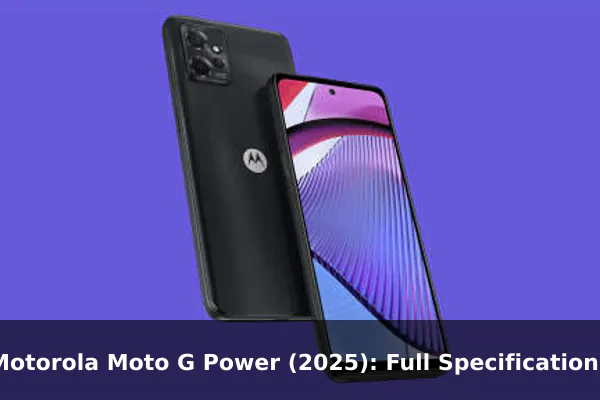
The Moto G Power (2025) is not a compact phone. At 166.6 x 77.1 x 8.7 mm and 208 g, it is large and fairly substantial in the hand. That size makes sense for a 6.8-inch display and 5000mAh battery, but users moving from a smaller device should expect a two-handed experience. The eco leather-style silicone polymer back is also a useful design choice because it should feel warmer and less slippery than plain glossy plastic.
Durability is one of the phone’s clearest differentiators. The front uses Gorilla Glass 5, while the IP68/IP69 rating means dust-tight protection, immersion resistance, and resistance to high-pressure water jets under rated conditions. The MIL-STD-810H compliance note should not be read as a promise of extreme ruggedness, but it does suggest Motorola is positioning this model for more demanding everyday use than the average budget handset.
Display Experience
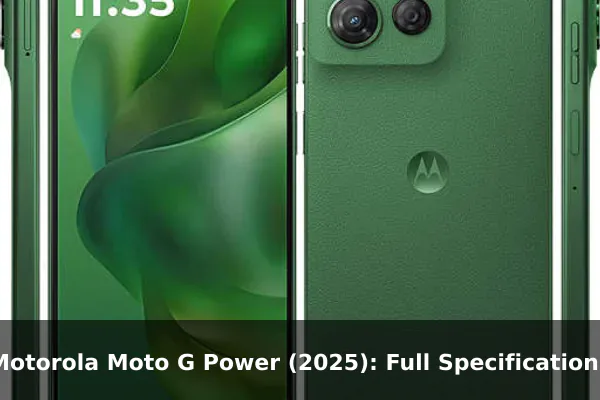
The 6.8-inch IPS LCD is built for size and smoothness. Its 1080 x 2388 resolution gives a sharp enough Full HD-class image at about 385ppi, while the 120Hz refresh rate should make scrolling, menus, and supported motion feel more fluid than a basic 60Hz panel. For reading, video, maps, and social apps, this is a sensible specification mix.
The tradeoff is that this is still an LCD rather than an OLED display, so buyers should not expect the deepest blacks or the same contrast character found on higher-end panels. However, the provided test data is encouraging: 993 nits measured maximum brightness and a 1358:1 contrast ratio make the display look competitive for outdoor readability and general content use in its class.
Performance and Gaming
The MediaTek Dimensity 6300 is a modern 6nm chipset with two Cortex-A76 performance cores and six Cortex-A55 efficiency cores. Paired with 8GB of RAM, it should be comfortable for messaging, browsing, navigation, streaming, banking apps, and moderate multitasking. The dedicated microSDXC slot also helps users who prefer local files over cloud storage.
The test scores frame expectations clearly. AnTuTu v10 at 440530 and GeekBench v6 at 2090 point to solid budget 5G performance, not flagship speed. The 3DMark Wild Life Extreme score of 383 also suggests demanding 3D games will need modest graphics settings. Casual games and lighter titles should be fine, but this is not the phone to buy primarily for high-end mobile gaming.
Camera Setup
The rear camera system is practical: a 50MP wide camera with PDAF and optical image stabilization, plus an 8MP ultrawide camera with autofocus. OIS is important at this level because it can help with steadier shots and reduce blur in lower light, especially when compared with budget phones that rely only on electronic stabilization or software processing.
The ultrawide camera adds flexibility for landscapes, interiors, group shots, and close-up use where supported, but the hardware still signals a midrange-to-budget camera experience. Video tops out at 1080p at 30fps on both rear and front cameras, so buyers who want 4K recording, higher frame-rate video, or advanced creator tools should look higher up the market. For everyday stills, documents, social sharing, and travel snapshots, the setup is sensibly equipped.
Battery and Charging
Battery life is central to the Moto G Power identity, and the 5000mAh capacity matches that role. The supplied active use score of 11:56h suggests dependable endurance across mixed use rather than a phone that only looks good in standby claims. For commuters, students, field workers, and heavy navigation users, that practical runtime matters more than a slightly thinner body.
Charging support is another advantage. The phone supports 30W wired charging and 15W wireless charging, a rare convenience in many lower-priced models. Wireless charging is not usually the fastest way to refill a phone, but it is useful on a desk, nightstand, or shared charger. The presence of USB-C 2.0 is standard for the category, though it should not be mistaken for a high-speed data or display-output feature.
Software and Updates
The phone ships with Android 15 and is listed with up to two major Android upgrades. That gives it a clearer software runway than older budget devices launching with outdated Android versions, although buyers who want very long update commitments may still prefer brands or models with longer published support policies.
Motorola’s software approach is usually close to stock Android with added Moto features, and the listed hardware supports common usability touches such as a side-mounted fingerprint reader, gyro, compass, proximity sensor, and barometer. For most users, the software appeal is straightforward: current Android, familiar controls, and enough support for the normal life cycle of an affordable phone.
Connectivity and Audio
Connectivity is broad. The Moto G Power (2025) supports GSM, HSPA, LTE, and sub-6 5G, including SA and NSA 5G bands. The long band list is particularly relevant for US buyers because it covers many mainstream carrier ranges, though actual compatibility still depends on the exact variant, carrier certification, and local network policy.
Wireless features include dual-band Wi-Fi 802.11 a/b/g/n/ac, Bluetooth, GPS with GALILEO and GLONASS support, NFC, and USB Type-C. Audio is also unusually complete for the segment: stereo speakers with Dolby Atmos, a 3.5mm headphone jack, and FM radio in the supplied source data. The tested loudspeaker result of -22.3 LUFS is marked excellent, making this phone more appealing for video, podcasts, and speakerphone use.
Who Should Buy It
The Moto G Power (2025) is best for buyers who want a durable, long-lasting, feature-rich Android phone without paying flagship money. It fits people who value a big screen, expandable storage, wired headphones, NFC payments, wireless charging, and water resistance more than OLED contrast, 4K video, or premium gaming performance.
It is less ideal for users who want a compact phone, a high-end camera system, or the fastest chipset available near the price. It also has a large body and LCD panel, so display purists and one-handed-phone fans should compare alternatives carefully. Still, as a daily utility phone with unusual toughness and charging flexibility, it has a distinct place in Motorola’s 2025 lineup.
References
- Motorola Support: moto g power – 2025 specifications
- Motorola News: moto g and moto g power launch details
- Source catalog listing for Motorola Moto G Power (2025)
Conclusion
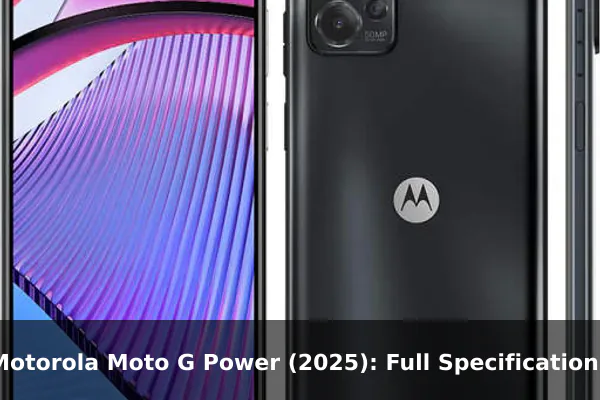
The Motorola Moto G Power (2025) is a strong choice for buyers who want a large-screen budget 5G phone with real durability, good endurance, expandable storage, OIS, stereo speakers, NFC, and both wired and wireless charging. Choose it if practicality matters more than flagship speed or premium display contrast.
