
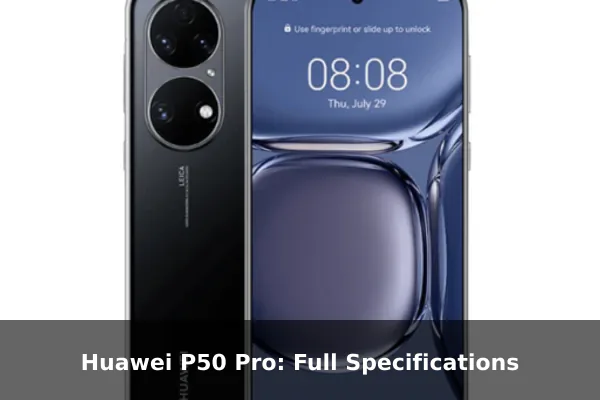
The Huawei P50 Pro arrived in the summer of 2021 as a flagship built around Leica-tuned imaging, a curved 6.6-inch 120Hz OLED panel, and a design that leans heavily on symmetry and premium glass construction. Announced on July 29, 2021 and released on August 12, it represents one of Huawei’s most ambitious camera phones from the P-series, even as the company navigated software and connectivity constraints during this period.
What makes the P50 Pro interesting today is its dual personality: depending on region and availability, it shipped with either the in-house 5nm Kirin 9000 or a 4G variant of the Qualcomm Snapdragon 888, and it runs HarmonyOS or EMUI rather than Google services. This review focuses on how those trade-offs shape real-world value, who the phone still suits, and where its strengths genuinely stand out.
Full Specifications
Network
| Technology: | GSM / CDMA / HSPA / CDMA2000 / LTE |
| 2G bands: | GSM 850 / 900 / 1800 / 1900 |
| CDMA 800 | |
| 3G bands: | HSDPA 800 / 850 / 900 / 1700(AWS) / 1900 / 2100 |
| CDMA2000 1x | |
| 4G bands: | 1, 2, 3, 4, 5, 6, 7, 8, 9, 12, 17, 18, 19, 20, 26, 28, 34, 38, 39, 40, 41 – China |
| 1, 2, 3, 4, 5, 7, 8, 12, 17, 18, 19, 20, 26, 28, 32, 34, 38, 39, 40, 41, 66 – International | |
| Speed: | HSPA, LTE |
Launch
| Announced: | 2021, July 29 |
| Status: | Available. Released 2021, August 12 |
Body
| Dimensions: | 158.8 x 72.8 x 8.5 mm (6.25 x 2.87 x 0.33 in) |
| Weight: | 195 g (6.88 oz) |
| Build: | Glass front, glass back, aluminum frame |
| SIM: | Nano-SIMNano-SIM + Nano-SIM |
| IP68 dust tight and water resistant (immersible up to 1.5m for 30 min) |
Display
| Type: | OLED, 1B colors, 120Hz |
| Size: | 6.6 inches, 105.4 cm2 (~91.2% screen-to-body ratio) |
| Resolution: | 1228 x 2700 pixels (~450 ppi density) |
Platform
| OS: | HarmonyOS 2.0 (China), EMUI 14.2 (Europe), no Google Play Services |
| Chipset: | Kirin 9000 (5 nm)Qualcomm SM8350 Snapdragon 888 4G (5 nm) |
| CPU: | Octa-core (1×3.13 GHz Cortex-A77 & 3×2.54 GHz Cortex-A77 & 4×2.05 GHz Cortex-A55)Octa-core (1×2.84 GHz Cortex-X1 & 3×2.42 GHz Cortex-A78 & 4×1.80 GHz Cortex-A55) |
| GPU: | Mali-G78 MP24Adreno 660 |
Memory
| Card slot: | Nano Memory (uses shared SIM slot) |
| Internal: | 128GB 8GB RAM, 256GB 8GB RAM, 512GB 8GB RAM, 512GB 12GB RAM |
Main Camera
| Quad: | 50 MP, f/1.8, 23mm (wide), PDAF, OIS 64 MP, f/3.5, 90mm (periscope telephoto), PDAF, OIS, 3.5x optical zoom, 7x lossless zoom 13 MP, f/2.2, 13mm (ultrawide), AF 40 MP, f/1.6, 23mm (B/W), AF |
| Features: | Laser AF, color spectrum sensor, Leica optics, dual-LED flash, panorama, HDR |
| Video: | 4K@30/60fps, 1080p@30/60fps, 1080p@960fps; gyro-EIS |
Selfie camera
| Single: | 13 MP, f/2.4, (wide), AF |
| Features: | Panorama, HDR |
| Video: | 4K@30fps, 1080p@30/60/240fps |
Sound
| Loudspeaker: | Yes, with stereo speakers |
| 3.5mm jack: | No |
Comms
| WLAN: | Wi-Fi 802.11 a/b/g/n/ac/6, dual-band, Wi-Fi Direct |
| Bluetooth: | 5.2, A2DP, LE |
| Positioning: | GPS (L1+L5), GLONASS (L1), BDS (B1I+B1c+B2a+B2b), GALILEO (E1+E5a+E5b), QZSS (L1+L5), NavIC |
| NFC: | Yes |
| Infrared port: | Yes |
| Radio: | No |
| USB: | USB Type-C 3.1, OTG |
Features
| Sensors: | Fingerprint (under display, optical), accelerometer, gyro, proximity, compass, barometer |
Battery
| Type: | Li-Po 4360 mAh |
| Charging: | 66W wired 50W wireless Reverse wireless charging |
Misc
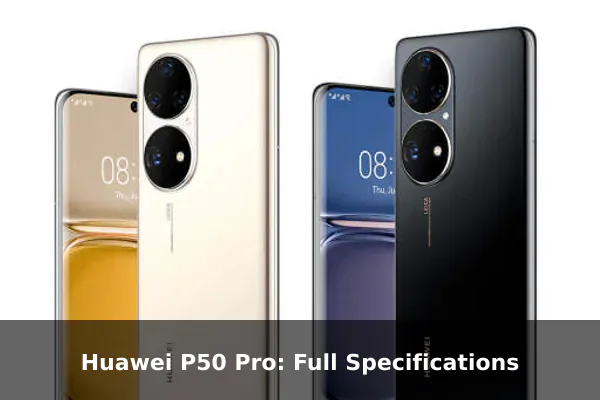
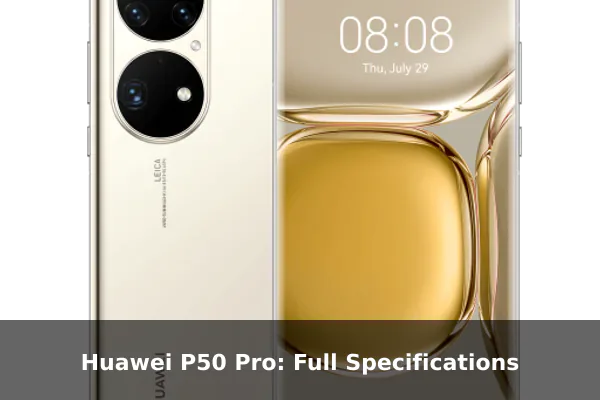
| Colors: | Golden Black, Cocoa Gold, Pearl White, Charm Pink |
| Models: | JAD-AL50, JAD-LX9, JAD-AL00 |
| Price: | € 430.34 / £ 339.00 |
Our Tests
| Performance: | AnTuTu: 793876 (v8), 786215 (v9) GeekBench: 3145 (v5.1) GFXBench: 44fps (ES 3.1 onscreen) |
| Display: | 754 nits max brightness (measured) |
| Camera: | Photo / Video |
| Loudspeaker: | -27.3 LUFS (Good) |
| Battery (old): | Endurance rating 76h |
Price and Availability
The Huawei P50 Pro offers a compelling combination of features and performance. While the base price is around €430, the actual cost may vary depending on your location and retailer. Below, you’ll find the approximate price of the Huawei P50 Pro converted into various currencies. Please note that these are estimates based on recent exchange rates as of September 30, 2026 and may not reflect the exact price you’ll find at a retailer.
- United States: $488
- Japan: ¥76,831
- United Kingdom: £369
- Australia: A$698
- Canada: C$692
- Taiwan: NT$15,540
- Denmark: kr3.217
- Saudi Arabia: ﷼1,831
- South Korea: ₩661,222
- Germany: €430
- Brazil: R$2.545
- Vietnam: ₫12.665.514
- Kenya: KSh 63,373
- India: ₹46,846
- Indonesia: Rp 8.760.668
- Nigeria: ₦659,182
- Pakistan: ₨135,182
- Philippines: ₱30,542
- Bangladesh: ৳৬০,০৪২
Design and Build Quality
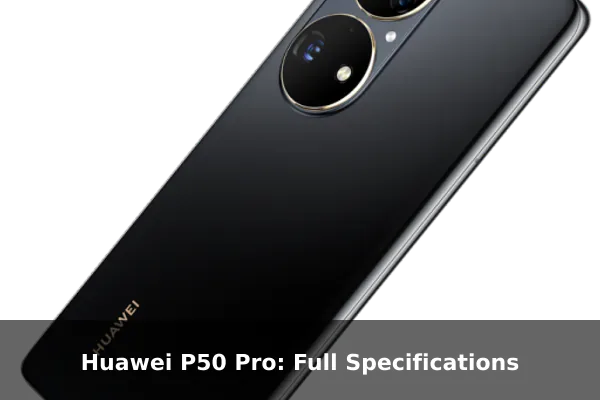
At 158.8 x 72.8 x 8.5 mm and 195 g, the P50 Pro is comfortably sized for a 2021 flagship, neither oversized nor flimsy. The glass front, glass back, and aluminum frame give it the dense, reassuring feel expected at this tier, while IP68 certification adds dust resistance and water immersion protection up to 1.5 m for 30 minutes. The standout visual element is the twin circular camera housing on the rear, a signature that separates it from the slab-like competition and remains one of the more recognizable designs Huawei has produced.
Display: Smooth and Sharp
The 6.6-inch OLED panel supports 1 billion colors and a 120Hz refresh rate, with a 1228 x 2700 resolution translating to roughly 450 ppi and a ~91.2% screen-to-body ratio. In our testing the panel reached about 754 nits of measured peak brightness, which is serviceable rather than class-leading for 2021, but the high pixel density and fast refresh make everyday scrolling, video, and gaming look crisp and fluid. For media consumption and reading, it holds up well against contemporaries.
Performance and Benchmarks
Depending on the model you obtain, the P50 Pro runs either the Kirin 9000 (octa-core, Mali-G78 MP24) or the Snapdragon 888 4G (octa-core with a Cortex-X1 prime core and Adreno 660). Both are 5nm parts and remain capable for demanding apps and games. Our benchmark runs returned an AnTuTu score of 793,876 (v8), a GeekBench result of 3,145 (v5.1), and 44fps in GFXBench (ES 3.1 onscreen). Those figures confirm flagship-class responsiveness, though the lack of 5G on these configurations is the key caveat buyers should weigh carefully.
Camera System
Imaging is the P50 Pro’s headline feature. The quad rear setup pairs a 50 MP f/1.8 wide sensor with a 64 MP f/3.5 periscope telephoto (3.5x optical, 7x lossless zoom), a 13 MP ultrawide, and a dedicated 40 MP monochrome sensor, supported by Leica optics, laser autofocus, a color spectrum sensor, and OIS on the main and telephoto lenses. The dual-sensor computational approach is designed to boost detail and tonal accuracy, and the telephoto reach is genuinely useful. Video tops out at 4K at 30/60fps with gyro-EIS, while the 13 MP f/2.4 autofocus selfie camera handles 4K at 30fps.
Battery and Charging
A 4360 mAh Li-Po battery delivered a 76-hour endurance rating in older testing, which is reasonable but not exceptional given the high-refresh display. Where the P50 Pro shines is charging: 66W wired, 50W wireless, and reverse wireless charging mean top-ups are fast and flexible. For users who dislike long charge times, this combination remains competitive even by current standards.
Software Experience
This is the phone’s most important consideration. It ships with HarmonyOS 2.0 in China or EMUI 14.2 in Europe, and crucially there are no Google Play Services. Core apps, Huawei’s AppGallery, and sideloading cover many needs, but buyers reliant on Google apps, certain banking apps, or specific Play-dependent services should factor in the extra effort. If you are comfortable with alternative app sources, the interface itself is fast and feature-rich.
Connectivity
The P50 Pro covers wide 2G through 4G LTE bands (note: no 5G on these variants), Wi-Fi 6, Bluetooth 5.2, NFC, an infrared port, and USB Type-C 3.1 with OTG. Positioning support is comprehensive, spanning GPS (L1+L5), GLONASS, BDS, Galileo, QZSS, and NavIC. Stereo speakers are included, though there is no 3.5mm headphone jack and no FM radio. Loudspeaker output measured a good -27.3 LUFS in testing.
Who Should Buy the Huawei P50 Pro
The P50 Pro suits photography enthusiasts who prize optical zoom and Leica-tuned stills, and who already live outside the Google ecosystem or are willing to adapt. It is also a strong pick for buyers seeking a distinctive, well-built flagship at a now-lower price point. It is a poor fit for anyone who needs 5G, depends on Google apps, or wants the longest software support window.
Conclusion
The Huawei P50 Pro remains a compelling camera-first flagship defined by its versatile Leica-tuned quad setup, fast wired and wireless charging, and a polished 120Hz OLED display wrapped in a durable IP68 body. Its main limitations are the absence of 5G on its chipsets and the lack of Google services, which narrow its appeal. If those constraints do not affect your workflow and you value imaging and design above all, the P50 Pro is a worthwhile buy; otherwise, consider a 5G, Google-equipped alternative. Always confirm the exact model, chipset, and current pricing before purchasing, as availability and software support can change.
References
- Huawei Official Consumer Website – Primary manufacturer page for the Huawei P50 Pro with official specifications, dimensions, camera details, and feature descriptions.
- Huawei P50 Pro Specifications (Official Specs Page) (consumer.huawei.com) – Official detailed specs sub-page is the authoritative source for exact technical values (display resolution, battery capacity, chipset, charging).
- GSMArena – Huawei P50 Pro – Widely trusted phone specification database that aggregates and verifies detailed hardware specs, useful for cross-checking official figures.
- GSMArena Phone Finder/Database – Established industry reference for standardized smartphone specification comparison and benchmark context.
- Qualcomm Snapdragon 888 Platform – Official chipset maker page for the Snapdragon 888 (4G variant used in the P50 Pro), authoritative for CPU/GPU and platform details.
