
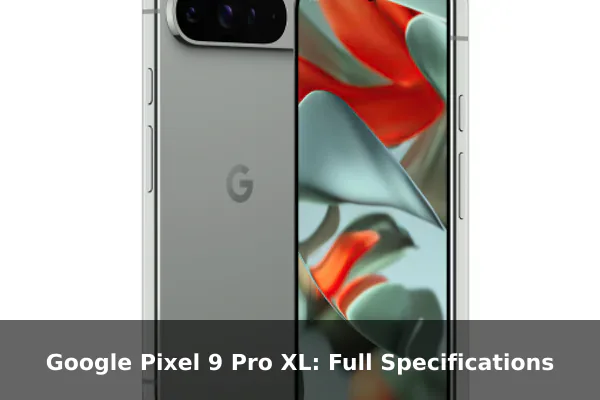
The Google Pixel 9 Pro XL sits at the top of Google’s 2024 flagship line as the largest, most feature-complete Pixel of its generation. Announced on August 13, 2024 and released on August 22, it pairs a 6.8-inch LTPO OLED panel with the Tensor G4 chip and Google’s deepest on-device AI toolkit, aiming squarely at buyers who want a big-screen phone that leans on software as much as hardware.
This overview looks past the raw numbers to explain what the Pixel 9 Pro XL actually delivers day to day: where its imaging system stands out, how the Tensor G4 balances performance against efficiency, and which users get the most from its long software commitment. Pricing shown here reflects source catalog data and can vary by region and configuration, so treat figures as a guide rather than a fixed quote.
Full Specifications
Network
| Technology: | GSM / HSPA / LTE / 5G |
| 2G bands: | GSM 850 / 900 / 1800 / 1900 |
| 3G bands: | HSDPA 800 / 850 / 900 / 1700(AWS) / 1900 / 2100 |
| 4G bands: | 1, 2, 3, 4, 5, 7, 8, 12, 13, 14, 17, 18, 19, 20, 25, 26, 28, 29, 30, 38, 40, 41, 48, 66, 71 – GGX8B |
| 1, 2, 3, 4, 5, 7, 8, 12, 13, 14, 17, 18, 19, 20, 21, 25, 26, 28, 29, 30, 32, 38, 39, 40, 41, 42, 48, 66, 71, 75 – GZC4K | |
| 5G bands: | 1, 2, 3, 5, 7, 8, 12, 14, 20, 25, 26, 28, 29, 30, 38, 40, 41, 48, 66, 70, 71, 77, 78, 258, 260, 261 SA/NSA/Sub6/mmWave – GGX8B |
| 1, 2, 3, 5, 7, 8, 12, 14, 20, 25, 26, 28, 30, 38, 40, 41, 66, 71, 75, 76, 77, 78, 79 SA/NSA/Sub6 – GZC4K | |
| Speed: | HSPA, LTE (CA), 5G |
Launch
| Announced: | 2024, August 13 |
| Status: | Available. Released 2024, August 22 |
Body
| Dimensions: | 162.8 x 76.6 x 8.5 mm (6.41 x 3.02 x 0.33 in) |
| Weight: | 221 g (7.80 oz) |
| Build: | Glass front (Gorilla Glass Victus 2), glass back (Gorilla Glass Victus 2), aluminum frame |
| SIM: | Nano-SIM + eSIM |
| IP68 dust tight and water resistant (immersible up to 1.5m for 30 min) |
Display
| Type: | LTPO OLED, 120Hz, HDR10+, 2000 nits (HBM), 3000 nits (peak) |
| Size: | 6.8 inches, 109.7 cm2 (~88.0% screen-to-body ratio) |
| Resolution: | 1344 x 2992 pixels, 20:9 ratio (~486 ppi density) |
| Protection: | Corning Gorilla Glass Victus 2, Mohs level 4 |
Platform
| OS: | Android 14, upgradable to Android 15, up to 7 major Android upgrades |
| Chipset: | Google Tensor G4 (4 nm) |
| CPU: | Octa-core (1×3.1 GHz Cortex-X4 & 3×2.6 GHz Cortex-A720 & 4×1.92 GHz Cortex-A520) |
| GPU: | Mali-G715 MC7 |
Memory
| Card slot: | No |
| Internal: | 128GB 16GB RAM, 256GB 16GB RAM, 512GB 16GB RAM, 1TB 16GB RAM |
| UFS 3.1 |
Main Camera
| Triple: | 50 MP, f/1.7, 25mm (wide), 1/1.31″, 1.2µm, dual pixel PDAF, OIS 48 MP, f/2.8, 113mm (periscope telephoto), 1/2.55″, dual pixel PDAF, OIS, 5x optical zoom 48 MP, f/1.7, 123˚ (ultrawide), 1/2.55″, dual pixel PDAF, |
| Features: | Multi-zone Laser AF, LED flash, Pixel Shift, Ultra-HDR, panorama, Best Take, Zoom Enhance |
| Video: | 8K@30fps (via cloud-based upscaling), 4K@24/30/60fps, 1080p@24/30/60/120/240fps; gyro-EIS, OIS, 10-bit HDR |
Selfie camera
| Single: | 42 MP, f/2.2, 17mm (ultrawide), PDAF |
| Features: | HDR, panorama |
| Video: | 4K@30/60fps, 1080p@30/60fps |
Sound
| Loudspeaker: | Yes, with stereo speakers |
| 3.5mm jack: | No |
Comms
| WLAN: | Wi-Fi 802.11 a/b/g/n/ac/6e/7, tri-band |
| Bluetooth: | 5.3, A2DP, LE, aptX HD |
| Positioning: | GPS (L1+L5), GLONASS, GALILEO, BDS, QZSS, NavIC |
| NFC: | Yes |
| Radio: | No |
| USB: | USB Type-C 3.2 |
Features
| Sensors: | Fingerprint (under display, ultrasonic), accelerometer, gyro, proximity, compass, barometer, thermometer (skin temperature) |
| Ultra Wideband (UWB) support Satellite SOS service Circle to Search |
Battery
| Type: | Li-Ion 5060 mAh |
| Charging: | 37W wired, PD3.0, PPS, 70% in 30 min 23W wireless (w/ Pixel Stand) 12W wireless (w/ Qi compatible charger) Reverse wireless Bypass charging |
Misc
| Colors: | Porcelain, Rose Quartz, Hazel, Obsidian |
| Models: | GGX8B, GZC4K, GQ57S |
| SAR EU: | 0.99 W/kg (head) 1.40 W/kg (body) |
| Price: | € 726.00 / $ 599.00 / £ 569.99 / ₹ 110,999 |
Our Tests
| Performance: | AnTuTu: 1380138 (v10) GeekBench: 4854 (v6) 3DMark: 2540 (Wild Life Extreme) |
| Display: | 2365 nits max brightness (measured) |
| Loudspeaker: | -25.5 LUFS (Very good) |
| Battery: | Active use score 12:32h |
EU LABEL
| Energy: | Class B |
| Battery: | 49:30h endurance, 1000 cycles |
| Free fall: | Class A (270 falls) |
| Repairability: | Class C |
Price and Availability
The Google Pixel 9 Pro XL offers a compelling combination of features and performance. While the base price is around €726, the actual cost may vary depending on your location and retailer. Below, you’ll find the approximate price of the Google Pixel 9 Pro XL converted into various currencies. Please note that these are estimates based on recent exchange rates as of July 12, 2026 and may not reflect the exact price you’ll find at a retailer.
- United States: $829
- Japan: ¥134,183
- United Kingdom: £619
- Australia: A$1,194
- Canada: C$1,174
- Taiwan: NT$26,641
- Denmark: kr5.417
- Saudi Arabia: ﷼3,110
- South Korea: ₩1,248,463
- Germany: €726
- Brazil: R$4.243
- Vietnam: ₫21.753.207
- Kenya: KSh 107,219
- India: ₹79,106
- Indonesia: Rp 14.981.056
- Nigeria: ₦1,129,070
- Pakistan: ₨230,642
- Philippines: ₱51,088
- Bangladesh: ৳১,০২,১৯১
Value: What You Actually Get
The Pixel 9 Pro XL is positioned as a full-fat flagship, and its spec sheet backs that up: a triple rear camera with a periscope telephoto, a large 5060 mAh battery, IP68 protection, and up to 1TB of storage all paired with a generous 16GB of RAM across every tier. Where it separates itself from rivals is longevity — Google promises up to seven major Android upgrades, which stretches the useful life of the phone well beyond the typical two- to three-year window. For buyers who keep a device for the long haul, that support policy is arguably the single biggest value driver here.
Design and Build Quality
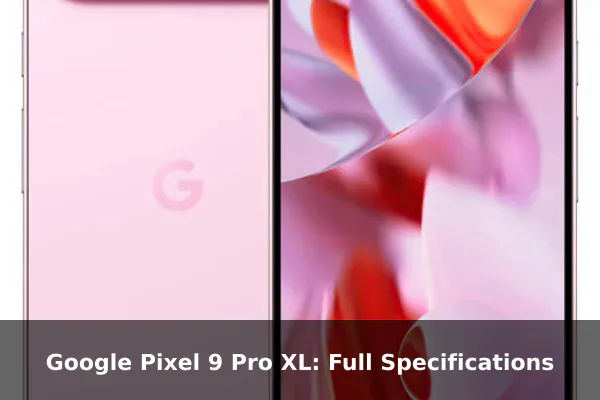
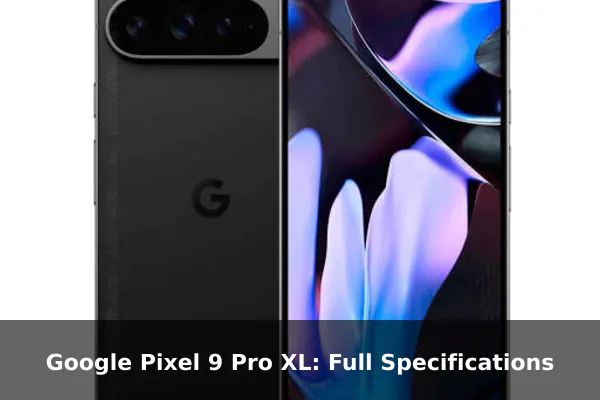
At 162.8 x 76.6 x 8.5 mm and 221 g, this is unmistakably a large phone, and the weight reflects its premium construction. Google uses Gorilla Glass Victus 2 on both the front and back with an aluminum frame, and rates the body IP68 for dust and water resistance, immersible up to 1.5m for 30 minutes. The flat display and refined camera bar give the Pro XL a distinctive, tool-like silhouette. Color options — Porcelain, Rose Quartz, Hazel, and Obsidian — cover both understated and warmer tastes.
Display Experience
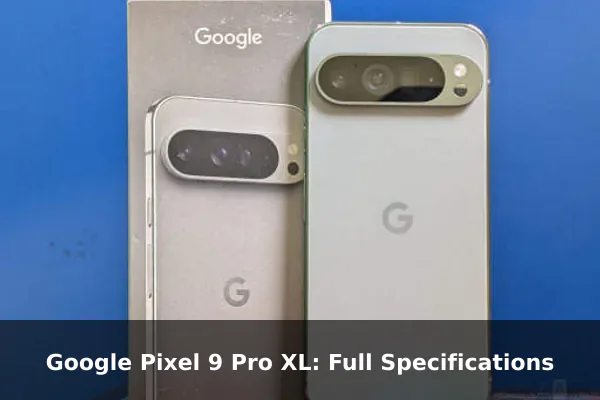
The 6.8-inch LTPO OLED runs at 120Hz with a sharp 1344 x 2992 resolution (~486 ppi) and 20:9 aspect ratio, giving roughly 88% screen-to-body ratio. Google quotes 2000 nits in high-brightness mode and 3000 nits peak, and independent testing measured about 2365 nits maximum brightness — enough for confident outdoor visibility. HDR10+ support and Gorilla Glass Victus 2 (rated Mohs level 4) round out a panel that is well suited to video, gaming, and everyday reading.
Performance and Thermals
The 4 nm Google Tensor G4 uses an octa-core layout (1×3.1 GHz Cortex-X4, 3×2.6 GHz Cortex-A720, 4×1.92 GHz Cortex-A520) with a Mali-G715 MC7 GPU. Benchmarks place it around 1,380,138 on AnTuTu v10, 4854 on Geekbench 6, and 2540 in 3DMark Wild Life Extreme. Those figures trail the fastest Snapdragon and Apple silicon of the same period, so the Pro XL is best understood as a phone tuned for AI workloads and consistent everyday responsiveness rather than raw peak throughput. Storage uses UFS 3.1 rather than the newer 4.0 standard, a detail worth noting for heavy file-transfer users.
Camera System
The imaging package is a highlight. The rear array combines a 50 MP wide (f/1.7, OIS), a 48 MP periscope telephoto with 5x optical zoom and OIS, and a 48 MP ultrawide with autofocus. Features like Pixel Shift, Ultra-HDR, Best Take, and Zoom Enhance lean heavily on Google’s computational photography, and video tops out at 4K@60fps with 10-bit HDR, plus an 8K@30fps option handled through cloud-based upscaling. The 42 MP ultrawide selfie camera with PDAF is unusually capable for group shots and 4K vlogging. For photography-first buyers, this is one of the phone’s strongest arguments.
Battery and Charging
A 5060 mAh Li-Ion cell drives all-day use, and testing produced an Active Use Score of 12:32h with an EU-label endurance rating of 49:30h over a 1000-cycle lifespan. Charging is more modest than some rivals: 37W wired reaches about 70% in 30 minutes, alongside 23W wireless via Pixel Stand, 12W Qi, reverse wireless, and bypass charging. The Pro XL prioritizes battery health and wireless flexibility over headline fast-charge speeds.
Software and AI Features
Shipping with Android 14 and upgradable to Android 15, the Pro XL is built around Google’s AI suite, including Circle to Search and Satellite SOS service. The standout, again, is the update commitment — up to seven years of major OS upgrades — which keeps the software current far longer than most Android competitors. Buyers should confirm the exact support window and regional availability of AI and satellite features through Google’s official channels, as these can differ by market.
Connectivity
Connectivity is comprehensive: Wi-Fi 7 (tri-band), Bluetooth 5.3 with aptX HD, NFC, Ultra Wideband, and USB Type-C 3.2 for faster data. 5G coverage spans Sub-6 and, on the GGX8B model, mmWave, so travelers should match the model variant (GGX8B, GZC4K, or GQ57S) to their region’s bands. Positioning covers GPS L1+L5, GLONASS, Galileo, BeiDou, QZSS, and NavIC. There is no microSD slot, no 3.5mm jack, and no FM radio.
Who Should Buy It
The Pixel 9 Pro XL suits big-screen users who value camera intelligence, a clean software experience, and industry-leading update support over the highest raw benchmark scores. It is a natural pick for photographers, long-term owners, and anyone invested in Google’s ecosystem. Gamers chasing peak frame rates or buyers who want the fastest wired charging may find better matches elsewhere.
Conclusion
The Google Pixel 9 Pro XL is a confident, software-led flagship: a bright 120Hz LTPO display, a versatile triple camera with 5x periscope zoom, robust IP68 build, and an exceptional seven-year update promise headline the package. Its Tensor G4 favors AI and efficiency over benchmark dominance, and charging speeds are merely adequate, so it rewards buyers who prioritize longevity, imaging, and a polished experience above spec-sheet extremes. If you want a large Pixel that stays current for years and shoots beautifully, the 9 Pro XL is an easy recommendation — just verify pricing, model variant, and feature availability for your region before buying.
References
- Google Store – Pixel 9 Pro and Pixel 9 Pro XL Tech Specs – Primary manufacturer specs for Pixel 9 Pro XL display, dimensions, battery, memory, cameras, processor, durability, colors, and in-box contents.
- Google Pixel Phone Help – Pixel phone hardware tech specs – Official Google support reference with detailed Pixel 9 Pro XL hardware specs, regional model variants, network bands, footnotes, warranty, and safety details.
- Google Pixel Phone Help – 5G compatibility and roaming on Pixel phones – Official source for Pixel 9 Pro XL model IDs and whether each variant supports Sub-6 or mmWave 5G.
- Google Blog – The new Pixel 9 phones bring you the best of Google AI – Official launch article confirming announcement date, pricing, availability, Tensor G4, RAM, display sizes, AI features, and key camera claims.
- Google Pixel Phone Help – Pixel software update support – Official source for Pixel 9 Pro XL software support duration, including OS, security, and Pixel Drop updates.
