
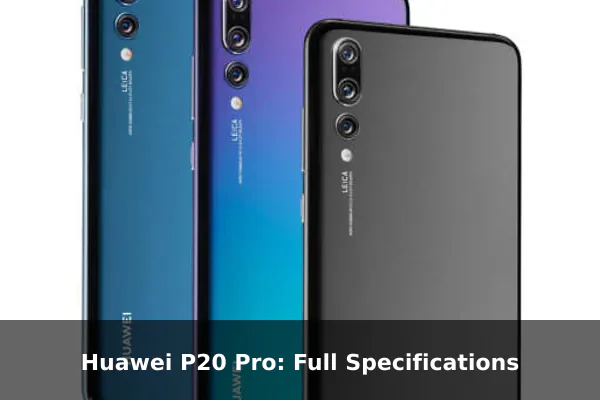
The Huawei P20 Pro remains one of Huawei’s most recognizable camera-focused flagships, built around a Leica triple rear camera system, OLED display, Kirin 970 chipset, and a 4000 mAh battery. It launched in 2018, but its hardware profile still makes it interesting for readers comparing older premium phones against newer mid-range models.
This article focuses on the Huawei P20 Pro as a discontinued flagship with a distinct value angle: imaging hardware, premium materials, broad LTE support, and long-term usability. A separate full specifications table will cover the raw technical details.
Full Specifications
Network
| Technology: | GSM / HSPA / LTE |
| 2G bands: | GSM 850 / 900 / 1800 / 1900 |
| 3G bands: | HSDPA 850 / 900 / 1900 / 2100 |
| 4G bands: | 1, 2, 3, 4, 5, 6, 7, 8, 9, 12, 17, 18, 19, 20, 26, 28, 32, 34, 38, 39, 40 |
| Speed: | HSPA 42.2/5.76 Mbps, LTE (3CA) Cat16 1024/150 Mbps |
Launch
| Announced: | 2018, March 27. Released 2018, April 06 |
| Status: | Discontinued |
Body
| Dimensions: | 155 x 73.9 x 7.8 mm (6.10 x 2.91 x 0.31 in) |
| Weight: | 180 g (6.35 oz) |
| Build: | Glass front (Gorilla Glass 5), glass back, aluminum frame |
| SIM: | Nano-SIMNano-SIM + Nano-SIM |
| IP67 dust/water resistant (up to 1m for 30 min) |
Display
| Type: | OLED |
| Size: | 6.1 inches, 93.9 cm2 (~82.0% screen-to-body ratio) |
| Resolution: | 1080 x 2240 pixels, 18.7:9 ratio (~408 ppi density) |
| Protection: | Corning Gorilla Glass 5 |
Platform
| OS: | Android 8.1 (Oreo), upgradable to Android 10, EMUI 12 |
| Chipset: | Kirin 970 (10 nm) |
| CPU: | Octa-core (4×2.4 GHz Cortex-A73 & 4×1.8 GHz Cortex-A53) |
| GPU: | Mali-G72 MP12 |
Memory
| Card slot: | No |
| Internal: | 64GB 6GB RAM, 128GB 6GB RAM, 128GB 8GB RAM, 256GB 6GB RAM, 256GB 8GB RAM |
| UFS 2.1 |
Main Camera
| Triple: | 40 MP, f/1.8, 27mm (wide), 1/1.7″, PDAF, OIS 8 MP, f/2.4, 80mm (telephoto), 1/4.0″, PDAF, OIS, 3x optical zoom 20 MP B/W, f/1.6, 27mm (wide), 1/2.7″ |
| Features: | Laser AF, color spectrum sensor, Leica optics, LED flash, HDR, panorama |
| Video: | 4K@30fps, 1080p@60fps, 1080p@30fps (gyro-EIS), 720p@960fps |
Selfie camera
| Single: | 24 MP, f/2.0, 26mm (wide), 1/2.8″, 0.9µm |
| Features: | Leica optics |
| Video: | 1080p@30fps |
Sound
| Loudspeaker: | Yes, with stereo speakers |
| 3.5mm jack: | No |
| 32-bit/384kHz audio |
Comms
| WLAN: | Wi-Fi 802.11 a/b/g/n/ac, dual-band, Wi-Fi Direct |
| Bluetooth: | 4.2, A2DP, LE, EDR, aptX HD |
| Positioning: | GPS, GLONASS, GALILEO |
| NFC: | Yes |
| Infrared port: | Yes |
| Radio: | No |
| USB: | USB Type-C 3.1 |
Features
| Sensors: | Fingerprint (front-mounted), accelerometer, gyro, proximity, compass |
Battery
| Type: | Li-Po 4000 mAh, non-removable |
| Charging: | 22.5W wired, 58% in 30 min |
Misc
| Colors: | Black, Gold |
| Models: | CLT-L29C, CLT-L29, CLT-L09C, CLT-L09, CLT-AL00, CLT-AL01, CLT-TL01, CLT-AL00L, CLT-L04, HW-01K, CLT-L0J |
| Price: | About 410 EUR |
Our Tests
| Performance: | AnTuTu: 209884 (v7) GeekBench: 6679 (v4.4) GFXBench: 21fps (ES 3.1 onscreen) |
| Display: | Contrast ratio: Infinite (nominal), 4.087 (sunlight) |
| Camera: | Photo / Video |
| Loudspeaker: | Voice 71dB / Noise 69dB / Ring 91dB |
| Audio quality: | Noise -92.1dB / Crosstalk -92.1dB |
| Battery (old): | Endurance rating 89h |
Price and Availability
The Huawei P20 Pro offers a compelling combination of features and performance. While the base price is around €410, the actual cost may vary depending on your location and retailer. Below, you’ll find the approximate price of the Huawei P20 Pro converted into various currencies. Please note that these are estimates based on recent exchange rates as of August 17, 2026 and may not reflect the exact price you’ll find at a retailer.
- United States: $474
- Japan: ¥75,538
- United Kingdom: £350
- Australia: A$670
- Canada: C$658
- Taiwan: NT$15,180
- Denmark: kr3.065
- Saudi Arabia: ﷼1,779
- South Korea: ₩671,174
- Germany: €410
- Brazil: R$2.459
- Vietnam: ₫12.366.221
- Kenya: KSh 61,300
- India: ₹45,275
- Indonesia: Rp 8.448.402
- Nigeria: ₦644,774
- Pakistan: ₨131,720
- Philippines: ₱29,142
- Bangladesh: ৳৫৮,২১৯
Why Should You Buy the Huawei P20 Pro?
The strongest reason to consider the Huawei P20 Pro is its camera-first identity. Unlike many older flagships that now feel defined only by their processor age, the P20 Pro still has a memorable hardware setup: a 40 MP wide camera, an 8 MP telephoto camera with 3x optical zoom, and a 20 MP monochrome sensor. That combination gives it a different personality from ordinary single-camera or dual-camera phones from the same period.
It also offers several flagship basics that remain useful: an OLED panel, IP67 dust and water resistance, stereo speakers, NFC, infrared, fast wired charging, and a large battery for its generation. Buyers should approach it as a used or collectible flagship rather than a modern all-rounder, but the core package is still coherent.
Design and Build Quality
The Huawei P20 Pro uses a glass front, glass back, and aluminum frame, giving it the premium feel expected from a 2018 high-end device. At 155 x 73.9 x 7.8 mm and 180 g, it is not ultra-compact, but it is slimmer and lighter than many modern large-screen phones with bigger camera islands and heavier battery packs.
IP67 protection is a practical advantage, especially in the used-phone market where older premium models compete against budget devices that may not have certified resistance. The front-mounted fingerprint reader is another period-specific detail. Some users may prefer its speed and placement, while others may find the bottom bezel dated next to current full-screen designs.
Display Experience
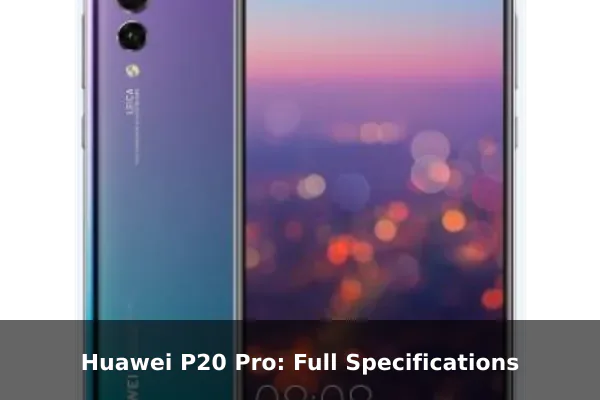
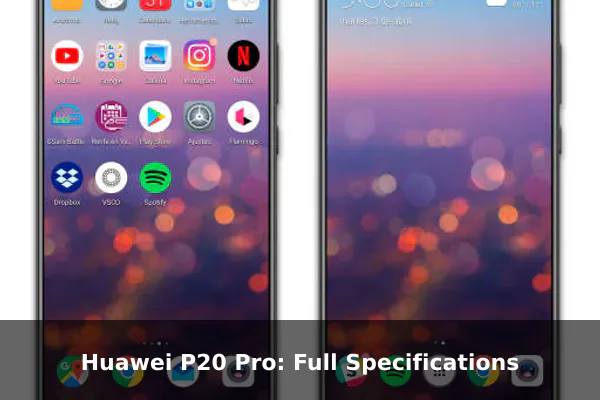
The 6.1-inch OLED display is one of the P20 Pro’s more durable strengths. Its 1080 x 2240 resolution produces around 408 ppi, which is still sharp enough for browsing, video, messaging, and photo review. The 18.7:9 aspect ratio makes the phone feel taller than classic 16:9 devices but less stretched than many newer panels.
Because this is not a high-refresh-rate display, buyers coming from 90 Hz or 120 Hz phones should expect less fluid scrolling. However, OLED contrast, deep blacks, and solid pixel density help the screen remain pleasant for media and everyday use. Corning Gorilla Glass 5 protection also supports the premium positioning, although used units should be checked carefully for scratches, burn-in, and repair history.
Performance and Storage
The Kirin 970 chipset was Huawei’s flagship silicon at launch, built on a 10 nm process with four Cortex-A73 performance cores and four Cortex-A53 efficiency cores. In everyday use, it is best suited to messaging, web browsing, social apps, navigation, camera use, and moderate multitasking. It should not be judged against current flagship processors, especially for heavy gaming or long-term app support.
The available memory configurations are generous for the era, with 6 GB or 8 GB RAM options and storage capacities listed from 64 GB to 256 GB. The use of UFS 2.1 storage is another advantage over slower eMMC-based budget phones. The important limitation is the lack of a card slot, so buyers should choose a storage variant that matches their photo, video, and offline media needs.
Camera System
The triple rear camera is the headline feature. The 40 MP wide sensor, optically stabilized 8 MP telephoto camera, and 20 MP black-and-white sensor were designed to support detail capture, zoom, low-light processing, and Leica-branded imaging modes. Hardware features such as laser autofocus, a color spectrum sensor, optical image stabilization on key cameras, HDR, panorama, and 4K video recording make the camera system more ambitious than many newer low-cost phones.
Video capture includes 4K at 30 fps, 1080p at 60 fps, stabilized 1080p at 30 fps, and 720p slow motion at 960 fps. The 24 MP selfie camera is also strong on paper, with 1080p video recording. Image processing expectations should be realistic, though: modern phones may deliver better HDR consistency and night processing, while the P20 Pro remains attractive for users who value its distinctive Leica-era color and zoom flexibility.
Battery Life and Charging
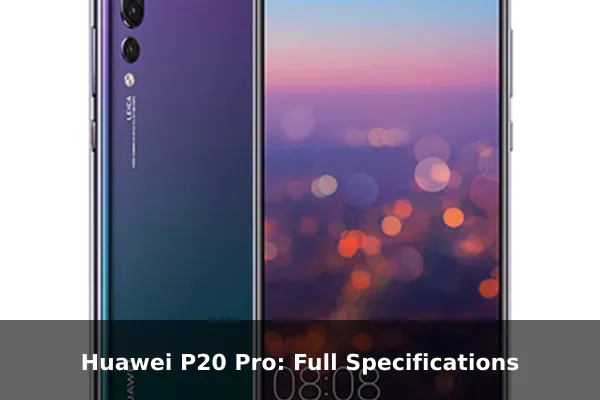
A 4000 mAh battery was large for a flagship in 2018, and it remains one of the reasons the P20 Pro aged well. The listed endurance rating of 89 hours suggests strong stamina when the phone was new, supported by the efficient OLED display and Kirin 970 platform.
The 22.5W wired charging system is not extreme by current standards, but the claim of 58% in 30 minutes was competitive for the device’s launch period. For a discontinued phone, real battery health matters more than the original rating. A used P20 Pro with a degraded battery may not represent the same experience as a well-preserved or serviced unit.
Software and Long-Term Support
The Huawei P20 Pro launched with Android 8.1 Oreo and is listed as upgradable to Android 10 with EMUI 12. That gives it a more modern interface than its original launch software, but it is still not a current Android platform. Users who rely on the latest security patches, new Android APIs, or long-term enterprise support should treat this as a key limitation.
For basic use, EMUI 12 can still cover the essentials, including calling, messaging, media, camera controls, and common apps. However, software support expectations should be conservative because the model is discontinued. Before buying, it is worth checking the exact regional model, installed firmware, Google service availability in the market, and whether banking or work apps remain compatible.
Connectivity and Audio
The Huawei P20 Pro supports GSM, HSPA, and LTE, with a broad LTE band list and Cat16 LTE speeds listed up to 1024 Mbps downlink and 150 Mbps uplink under supported network conditions. It does not include 5G, so buyers should view it as a 4G flagship. For many everyday users, that can still be adequate, but it is not future-facing for markets aggressively moving toward 5G plans.
Connectivity features are otherwise well rounded: dual-band Wi-Fi ac, Bluetooth 4.2 with aptX HD, GPS with GLONASS and GALILEO, NFC, infrared, and USB Type-C 3.1. Audio support includes stereo speakers and 32-bit/384kHz audio, but there is no 3.5 mm headphone jack. That means wired headphone users will need USB-C audio or an adapter.
Who Should Buy It?
The Huawei P20 Pro makes the most sense for buyers who want an older premium Huawei phone with a distinctive camera system, strong build quality, OLED display, and good battery credentials. It is also a good fit for collectors or photography-focused users who specifically want Huawei’s early Leica triple-camera flagship experience.
It is less suitable for users who need 5G, expandable storage, current Android version support, a high-refresh-rate display, or the best modern gaming performance. If the price is close to a newer mid-range phone with longer software support, the decision becomes less obvious. The P20 Pro is most compelling when its camera hardware, design, and flagship character are priced attractively.
Conclusion
The Huawei P20 Pro is a discontinued flagship that still stands out for its Leica triple camera, OLED display, IP67 build, stereo speakers, NFC, infrared, and 4000 mAh battery. Its main compromises are age, no 5G, no microSD slot, no headphone jack, and limited modern software longevity. Recommended for buyers who want a distinctive used camera flagship at the right price.
References
- Huawei Consumer Japan – HUAWEI P20 Pro Specs – Official Huawei product specifications page with core hardware details including display, chipset, memory, cameras, battery, connectivity, dimensions, and weight.
- Huawei Press Center – Huawei Unveils the HUAWEI P20 and HUAWEI P20 Pro – Official launch announcement in English confirming release context, key features, camera configuration, Kirin 970, EMUI 8.1, display size, battery, and colors.
- Huawei Support Singapore – HUAWEI CLT Mobile Phone User Guide – Official Huawei support documentation for HUAWEI P20 Pro CLT models, useful for verifying model names, supported software, and user-facing device features.
- GSMArena – Huawei P20 Pro – Well-known smartphone specifications database useful for cross-checking full spec tables, network bands, model variants, launch status, and feature omissions.
- AnandTech – The Huawei P20 & P20 Pro Review – Technical review with a detailed specification table and hardware analysis, useful for corroborating chipset, memory, storage, display, battery, connectivity, and camera details.
