
The Motorola Moto G Power (2026) is a budget-focused Android phone built around long battery life, broad 5G support, and tougher-than-usual protection for its class. It pairs a large 6.8-inch 120Hz LCD with a MediaTek Dimensity 6300 chipset, 8GB of RAM, expandable storage, and Android 16 out of the box.
Its most distinctive angle is not raw performance, but day-to-day dependability: a 5200mAh battery, IP68/IP69 resistance, Gorilla Glass 7i, a vegan-leather-style back, stereo speakers, NFC, and a 3.5mm headphone jack. That makes it a practical Moto G option for buyers who value durability and utility over premium materials or flagship camera hardware.
Full Specifications
Network
| Technology: | GSM / HSPA / LTE / 5G |
| 2G bands: | GSM 850 / 900 / 1800 / 1900 |
| 3G bands: | HSDPA 850 / 900 / 1700(AWS) / 1900 / 2100 |
| 4G bands: | 1, 2, 3, 4, 5, 7, 8, 12, 13, 14, 17, 18, 20, 25, 26, 28, 29, 30, 38, 39, 40, 41, 48, 66, 71 |
| 5G bands: | 2, 5, 7, 12, 14, 25, 26, 29, 30, 41, 48, 66, 70, 71, 77, 78 SA/NSA/Sub6 |
| Speed: | HSPA, LTE, 5G |
Launch
| Announced: | 2025, December 16 |
| Status: | Coming soon. Exp. release 2026, January 08 |
Body
| Dimensions: | 166.6 x 77.1 x 8.7 mm (6.56 x 3.04 x 0.34 in) |
| Weight: | 208 g (7.34 oz) |
| Build: | Glass front (Gorilla Glass 7i), silicone polymer (eco leather) back, plastic frame |
| SIM: | Nano-SIM + eSIM |
| IP68/IP69 dust tight and water resistant (high pressure water jets; immersible up to 1.5m for 30 min) MIL-STD-810H compliant* * does not guarantee ruggedness or use in extreme conditions |
Display
| Type: | IPS LCD, 120Hz, 1000 nits (HBM) |
| Size: | 6.8 inches, 110.9 cm2 (~86.3% screen-to-body ratio) |
| Resolution: | 1080 x 2388 pixels (~387 ppi density) |
| Protection: | Corning Gorilla Glass 7i |
Platform
| OS: | Android 16 |
| Chipset: | Mediatek Dimensity 6300 (6 nm) |
| CPU: | Octa-core (2×2.4 GHz Cortex-A76 & 6×2.0 GHz Cortex-A55) |
| GPU: | Mali-G57 MC2 |
Memory
| Card slot: | microSDXC (dedicated slot) |
| Internal: | 128GB 8GB RAM |
| UFS 2.2 |
Main Camera
| Dual: | 50 MP, f/1.8, (wide), 1/2.88″, 0.61µm, PDAF, OIS 8 MP, f/2.2, 119˚ 13mm (ultrawide), 1.12µm, AF |
| Features: | LED flash, HDR, panorama |
| Video: | 1080p@30/60fps |
Selfie camera
| Single: | 32 MP, f/2.5, (wide) |
| Video: | 1080p@30fps |
Sound
| Loudspeaker: | Yes, with stereo speakers (with Dolby Atmos) |
| 3.5mm jack: | Yes |
| 24-bit/192kHz Hi-Res audio |
Comms
| WLAN: | Wi-Fi 802.11 a/b/g/n/ac, dual-band |
| Bluetooth: | Yes |
| Positioning: | GPS, GALILEO, GLONASS |
| NFC: | Yes |
| Radio: | FM radio |
| USB: | USB Type-C 2.0 |
Features
| Sensors: | Fingerprint (side-mounted), accelerometer, gyro, proximity, compass, barometer |
Battery
| Type: | 5200 mAh |
| Charging: | 30W wired 15W wireless |
Misc
| Colors: | Pantone: Evening Blue, Pure Cashmere |
| Price: | About 250 EUR |
Price and Availability
The Motorola Moto G Power (2026) offers a compelling combination of features and performance. While the base price is around €250, the actual cost may vary depending on your location and retailer. Below, you’ll find the approximate price of the Motorola Moto G Power (2026) converted into various currencies. Please note that these are estimates based on recent exchange rates as of July 24, 2026 and may not reflect the exact price you’ll find at a retailer.
- United States: $285
- Japan: ¥46,586
- United Kingdom: £214
- Australia: A$408
- Canada: C$401
- Taiwan: NT$9,199
- Denmark: kr1.866
- Saudi Arabia: ﷼1,068
- South Korea: ₩419,597
- Germany: €250
- Brazil: R$1.445
- Vietnam: ₫7.474.470
- Kenya: KSh 36,946
- India: ₹27,480
- Indonesia: Rp 5.090.992
- Nigeria: ₦388,901
- Pakistan: ₨79,107
- Philippines: ₱17,578
- Bangladesh: ৳৩৫,১৩৬
Why Should You Buy the Motorola Moto G Power (2026)?
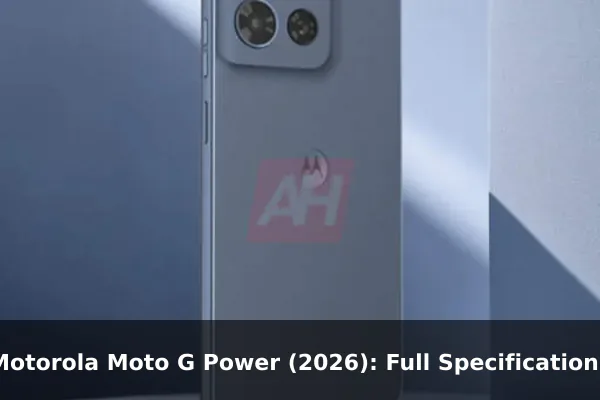
The Moto G Power line has always leaned toward battery-first value, and the 2026 model keeps that identity while adding a stronger durability story. This phone is best understood as a practical everyday device: large screen, solid battery capacity, 5G, expandable storage, headphone jack, NFC, and a body that is rated for dust and water resistance. It is not trying to replace a flagship, but it covers many features that budget phones often leave out.
For shoppers comparing affordable Android phones, the main appeal is balance. The Dimensity 6300 is a modest but modern 6nm chipset, the display is sharp enough at Full HD+, and the 50MP main camera includes optical image stabilization. The combination should suit messaging, navigation, streaming, social media, light gaming, video calls, and travel use without pushing the price into midrange flagship territory.
Design and Durability
The Motorola Moto G Power (2026) is a large phone, measuring 166.6 x 77.1 x 8.7 mm and weighing 208 g. That weight is noticeable, but it is expected from a device with a big screen, large battery, and reinforced protection. The build uses a Gorilla Glass 7i front, a plastic frame, and a silicone polymer eco-leather-style back, giving it a more textured feel than glossy plastic budget phones.
The durability rating is a key differentiator. IP68/IP69 certification means the phone is dust tight and rated for water immersion as well as high-pressure water jets under defined test conditions. Motorola also lists MIL-STD-810H compliance, though this should be treated as extra resistance rather than a guarantee that the phone is rugged in extreme conditions. For real-world users, the value is simple: better protection against rain, spills, dusty workspaces, and daily accidents.
Display Experience
The 6.8-inch IPS LCD is one of the phone’s biggest usability advantages. It uses a 1080 x 2388 resolution, giving it a sharp 387 ppi density, and the 120Hz refresh rate should make scrolling and animations feel smoother than a basic 60Hz panel. Motorola also lists up to 1000 nits in High Brightness Mode, which helps outdoor visibility.
The tradeoff is panel type. This is LCD, not OLED, so buyers should not expect the deep blacks or high contrast of AMOLED rivals. However, for users who prioritize size, refresh rate, and readability over cinematic contrast, the display setup is sensible. It should work well for maps, documents, video streaming, web browsing, and casual gaming, especially at this price level.
Performance and Storage
The MediaTek Dimensity 6300 gives the Moto G Power (2026) a current entry-to-midrange 5G platform. Its octa-core CPU combines two Cortex-A76 performance cores at 2.4GHz with six Cortex-A55 efficiency cores at 2.0GHz, while graphics are handled by the Mali-G57 MC2. This is a practical configuration for everyday Android use rather than heavy gaming or intensive video editing.
Motorola pairs the chipset with 8GB of RAM and 128GB of UFS 2.2 storage. The dedicated microSDXC slot is especially useful because it lets users expand storage without giving up the SIM setup. In daily use, that means more room for offline playlists, photos, downloads, and apps, while the faster UFS storage should feel more responsive than older eMMC-based budget phones.
Camera Setup
The rear camera system is led by a 50MP wide camera with PDAF and OIS. Optical image stabilization is important here because it helps reduce blur in lower light and improves handheld video stability compared with unstabilized budget sensors. The second rear camera is an 8MP ultrawide with autofocus, which also adds flexibility for landscapes, interiors, group shots, and close-up style shooting.
This is a useful dual-camera setup, but expectations should stay realistic. There is no dedicated telephoto camera, and video tops out at 1080p rather than 4K. The 32MP front camera is strong on paper for selfies and video calls, with 1080p recording at 30fps. For social media, scanning, casual portraits, and travel snapshots, the camera package looks well matched to the phone’s price class.
Battery and Charging
Battery life is the headline feature. The 5200mAh cell is larger than the common 5000mAh capacity in many affordable Android phones, and the efficient Dimensity 6300 platform should help stretch runtime. Users who mostly browse, message, stream audio, use maps, and take occasional photos should see the strongest benefit.
Charging is rated at 30W wired, which is useful but not class-leading. It is fast enough for practical top-ups, though some competitors may offer higher wattage. The source specification also lists 15W wireless charging, a feature that is still uncommon in many budget phones. If available in the buyer’s region or model variant, that would make the Moto G Power (2026) more convenient for desk and bedside charging.
Software and Updates
The phone ships with Android 16, giving it a current software baseline for 2026. Motorola’s software usually keeps close to stock Android while adding Moto features for gestures, security, display tools, and device personalization. That should appeal to users who prefer a lighter interface instead of a heavily customized Android skin.
Motorola’s official security update page lists the Moto G Power (2026) as launching in January 2026 with Android 16, with Android 17 planned as the next OS version and security updates scheduled to stop in January 2029. Motorola notes that update timing can vary by region, carrier, and distribution channel, so buyers should treat the schedule as a support plan rather than an exact rollout calendar.
Connectivity and Everyday Features
Connectivity is one of the Moto G Power (2026)’s strongest areas. It supports GSM, HSPA, LTE, and sub-6 5G with a wide band list, including key bands for broad coverage. The phone also includes Wi-Fi 5, Bluetooth, GPS with GALILEO and GLONASS, NFC, FM radio, and USB Type-C 2.0.
The practical extras matter. A side-mounted fingerprint reader keeps unlocking simple, the Nano-SIM plus eSIM setup is flexible, and the dedicated microSD slot helps users avoid storage anxiety. Stereo speakers with Dolby Atmos, Hi-Res audio support, and the 3.5mm jack make it more media-friendly than many modern budget phones that have dropped wired audio.
Who Should Buy It?
The Moto G Power (2026) is best for buyers who want a durable, long-lasting Android phone with a large screen and broad everyday features. It makes sense for students, commuters, field workers, delivery drivers, travelers, and anyone who values battery life, expandable storage, water resistance, and headphone support.
It is less ideal for users who want an OLED display, premium metal-and-glass construction, 4K video recording, a telephoto camera, or flagship-level gaming performance. Those buyers should look higher in Motorola’s Edge range or compare midrange models from Samsung, Xiaomi, OnePlus, and Google. As a practical Moto G device, though, this model has a clear identity.
Conclusion
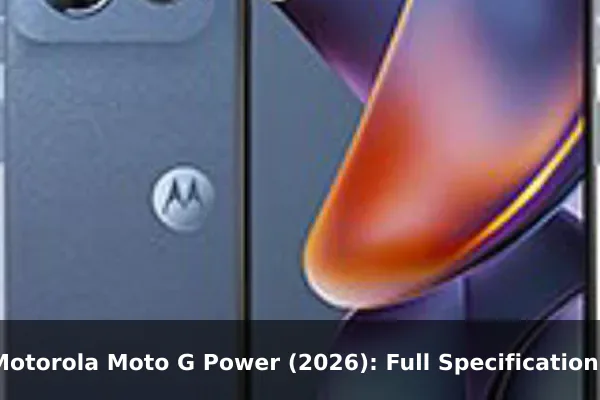
The Motorola Moto G Power (2026) stands out as a value-focused 5G phone with a large 120Hz display, 5200mAh battery, IP68/IP69 protection, expandable storage, NFC, stereo speakers, and a headphone jack. Its LCD panel and modest chipset keep it grounded in the budget class, but the overall feature mix is unusually practical. It is a strong recommendation for buyers who want dependable battery life and durability before premium extras.
References
- Motorola US – moto g power – 2026 Product Page – Official Motorola product page with headline features and full specifications for the US unlocked Moto G Power 2026 model.
- Motorola Support US – Specifications: moto g power 2026 – Official support specification sheet covering processor, RAM, storage, display, battery, cameras, dimensions, durability, ports, SIM, NFC, Wi-Fi, and network bands.
- Motorola Support US – About your hardware: moto g power – 2026 – Official hardware diagram reference for confirming physical layout, ports, buttons, cameras, sensors, SIM/SD tray, NFC touchpoint, and audio jack.
- Motorola Support US – Security Updates: moto g power – 2026 – Official Motorola software-support page confirming launch software, planned Android upgrade path, security update cadence, and support end date.
- FCC Equipment Authorization System – Official US regulatory database for verifying FCC certification details, SAR/radio filings, and model identifiers such as FCC ID IHDT56AU5 for Moto G Power 2026 variants.
