
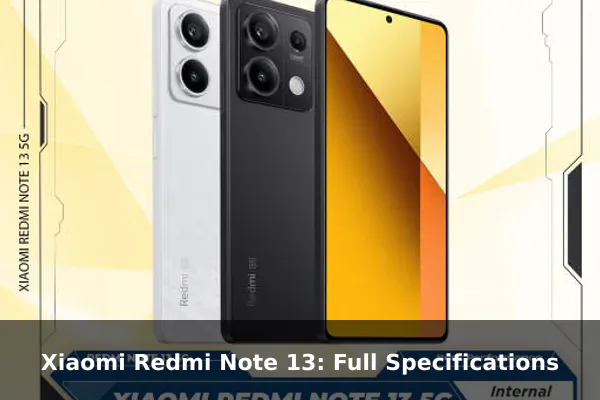
The Xiaomi Redmi Note 13 is a value-focused Android phone built around a large AMOLED display, 5G connectivity, and a 108 MP main camera. In this listing, the hardware points to the 5G Redmi Note 13 configuration, led by the MediaTek Dimensity 6080 chipset and a slim 7.6 mm body.
Rather than treating it as just another budget Redmi, the useful question is where this model still makes sense: buyers who want a bright 120Hz screen, expandable storage, a headphone jack, and broad network support without moving into the Pro-tier price range.
Full Specifications
Network
| Technology: | GSM / HSPA / LTE / 5G |
| 2G bands: | GSM 850 / 900 / 1800 / 1900 |
| 3G bands: | HSDPA 800 / 850 / 900 / 1700(AWS) / 1900 / 2100 – International |
| HSDPA 850 / 900 / 2100 – India | |
| 4G bands: | 1, 2, 3, 4, 5, 7, 8, 12, 13, 17, 18, 19, 20, 26, 28, 32, 38, 40, 41, 66 – International |
| 1, 3, 5, 8, 28 – India | |
| 5G bands: | 1, 3, 5, 7, 8, 20, 28, 38, 40, 41, 66, 77, 78 SA/NSA – International |
| 1, 3, 5, 8, 28, 40, 78 SA/NSA – India | |
| Speed: | HSPA, LTE, 5G |
Launch
| Announced: | 2024, January 04 |
| Status: | Available. Released 2024, January 10 |
Body
| Dimensions: | 161.1 x 75 x 7.6 mm (6.34 x 2.95 x 0.30 in) |
| Weight: | 174.5 g (6.14 oz) |
| Build: | Glass front (Gorilla Glass 5), plastic frame, plastic back |
| SIM: | Nano-SIM + Nano-SIM |
| IP54 dust protected and water resistant (water splashes) |
Display
| Type: | AMOLED, 1B colors*, 120Hz, 1920Hz PWM, 1000 nits (peak) |
| Size: | 6.67 inches, 107.4 cm2 (~88.9% screen-to-body ratio) |
| Resolution: | 1080 x 2400 pixels, 20:9 ratio (~395 ppi density) |
| Protection: | Corning Gorilla Glass 5 |
| *1B colors (market/region dependent) |
Platform
| OS: | Android 13, upgradable to Android 14, up to 2 major Android upgrades, HyperOS |
| Chipset: | Mediatek Dimensity 6080 (6 nm) |
| CPU: | Octa-core (2×2.4 GHz Cortex-A76 & 6×2.0 GHz Cortex-A55) |
| GPU: | Mali-G57 MC2 |
Memory
| Card slot: | microSDXC (uses shared SIM slot) |
| Internal: | 128GB 6GB RAM, 128GB 8GB RAM, 256GB 8GB RAM, 256GB 12GB RAM, 512GB 12GB RAM |
| UFS 2.2 |
Main Camera
| Triple: | 108 MP, f/1.7, (wide), 1/1.67″, 0.64µm, PDAF 8 MP, f/2.2, (ultrawide) 2 MP, f/2.4, (depth) |
| Features: | LED flash, HDR, panorama |
| Video: | 1080p@30fps |
Selfie camera
| Single: | 16 MP, f/2.4, (wide) |
| Features: | HDR, panorama |
| Video: | 1080p@30fps |
Sound
| Loudspeaker: | Yes |
| 3.5mm jack: | Yes |
| 24-bit/192kHz Hi-Res & Hi-Res wireless audio |
Comms
| WLAN: | Wi-Fi 802.11 a/b/g/n/ac, dual-band |
| Bluetooth: | 5.3, A2DP, LE |
| Positioning: | GPS, GLONASS |
| NFC: | Yes (market/region dependent) |
| Infrared port: | Yes |
| Radio: | No |
| USB: | USB Type-C 2.0, OTG |
Features
| Sensors: | Fingerprint (side-mounted), accelerometer, gyro, proximity, compass |
Battery
| Type: | Li-Po 5000 mAh |
| Charging: | 33W wired |
Misc
| Colors: | Graphite black (Stealth Black), Arctic White, Ocean Teal, Prism Gold |
| Models: | 2312DRAABG, 2312DRAABI |
| SAR: | 1.07 W/kg (head) 0.99 W/kg (body) |
| SAR EU: | 0.94 W/kg (head) 1.00 W/kg (body) |
| Price: | € 155.20 / $ 199.99 / £ 188.32 / ₹ 16,998 |
Our Tests
| Performance: | AnTuTu: 405118 (v9), 455421 (v10)
GeekBench: 1968 (v5), 1978 (v6) |
| Display: | 991 nits max brightness (measured) |
| Loudspeaker: | -24.0 LUFS (Very good) |
| Battery: | Active use score 9:49h |
Price and Availability
The Xiaomi Redmi Note 13 offers a compelling combination of features and performance. While the base price is around €155, the actual cost may vary depending on your location and retailer. Below, you’ll find the approximate price of the Xiaomi Redmi Note 13 converted into various currencies. Please note that these are estimates based on recent exchange rates as of September 29, 2026 and may not reflect the exact price you’ll find at a retailer.
- United States: $177
- Japan: ¥27,779
- United Kingdom: £133
- Australia: A$252
- Canada: C$250
- Taiwan: NT$5,613
- Denmark: kr1.160
- Saudi Arabia: ﷼662
- South Korea: ₩239,889
- Germany: €155
- Brazil: R$918
- Vietnam: ₫4.577.090
- Kenya: KSh 22,957
- India: ₹16,939
- Indonesia: Rp 3.169.650
- Nigeria: ₦239,414
- Pakistan: ₨48,894
- Philippines: ₱11,030
- Bangladesh: ৳২১,৭৬৫
Value Position
The Redmi Note 13 sits in the busy lower-midrange segment, but its strongest pitch is simple: it brings several everyday premium cues into a more affordable package. The 6.67-inch AMOLED panel, 120Hz refresh rate, Gorilla Glass 5 protection, 5G modem, 108 MP main camera, 5000 mAh battery, and 33W wired charging make it feel more complete than many entry-level phones. It is not trying to be a compact flagship or a gaming specialist. Its value is in offering a balanced spec sheet for buyers who care about display quality, storage flexibility, and modern connectivity first.

Design and Durability
At 161.1 x 75 x 7.6 mm and 174.5 g, the Redmi Note 13 is relatively thin and light for a phone with a 6.67-inch display and 5000 mAh battery. The build uses a Gorilla Glass 5 front, plastic frame, and plastic back, so it prioritizes weight and cost control over a glass-and-metal feel. IP54 dust and splash resistance is a welcome layer of reassurance for daily use, but it should not be treated as waterproofing. The side-mounted fingerprint reader is practical, fast to reach, and arguably easier to live with than a slower budget in-display sensor.
Display Experience
The display is one of the most convincing reasons to consider this phone. Xiaomi lists an AMOLED panel with 1080 x 2400 resolution, a 20:9 aspect ratio, about 395 ppi density, 120Hz refresh, 1920Hz PWM dimming, and peak brightness up to 1000 nits. The 1B color support is marked as market or region dependent, so buyers should check their local variant before treating that as guaranteed. In independent lab-style data supplied for this model, maximum measured brightness reached 991 nits, which lines up well with the phone’s outdoor-visibility claim.
Performance and Storage
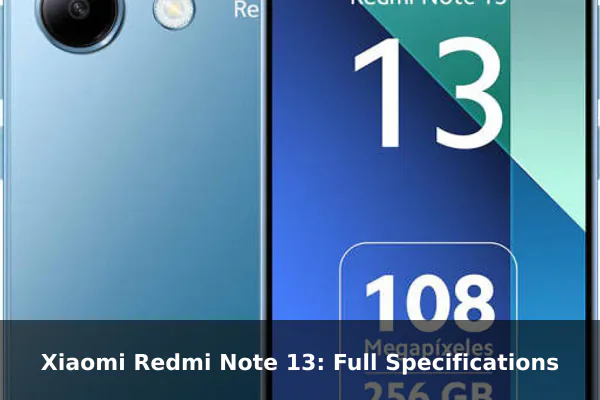
The MediaTek Dimensity 6080 is a 6 nm chipset with two Cortex-A76 performance cores at 2.4 GHz and six Cortex-A55 efficiency cores at 2.0 GHz, paired with Mali-G57 MC2 graphics. That is a sensible setup for social apps, browsing, video, messaging, camera use, and lighter gaming. Benchmarks in the source data show AnTuTu scores of 405118 on v9 and 455421 on v10, with GeekBench scores near the 1900 range depending on version. Storage is another advantage: configurations run from 128GB with 6GB RAM up to 512GB with 12GB RAM, using UFS 2.2, and the microSDXC slot can expand storage if you are willing to share the second SIM slot.
Camera Setup
The headline camera is the 108 MP wide sensor with PDAF, supported by an 8 MP ultrawide and a 2 MP depth camera in the supplied specification. That combination is best understood as a strong main-camera-first setup. The 108 MP sensor should be the default choice for detailed daylight scenes, documents, city shots, and casual portraits, while the ultrawide is useful when framing matters more than fine detail. Video tops out at 1080p at 30fps on both rear and front cameras, so this is not the best choice for buyers who want 4K capture, high-frame-rate video, or advanced stabilization options.
Battery and Charging
The 5000 mAh battery is a familiar Redmi strength, though the measured active use score of 9 hours and 49 minutes suggests this model is solid rather than outstanding for endurance. The 33W wired charging support is useful for topping up during the day, especially compared with slower 10W or 18W budget phones. Heavy gamers and constant mobile-data users may want stronger battery test results, but mixed users should find the capacity and charging speed reasonable for a thin 5G phone.
Software Outlook
The phone ships with Android 13 and is listed as upgradable to Android 14 with HyperOS, with up to two major Android upgrades. That software promise is important because the Redmi Note 13 is not only about launch-day hardware; its long-term value depends on security patches, app compatibility, and Xiaomi’s HyperOS feature rollout by region. Buyers should still check the exact regional ROM and update status, because software timing can vary between global, Indian, and carrier-linked units.
Connectivity and Practical Features
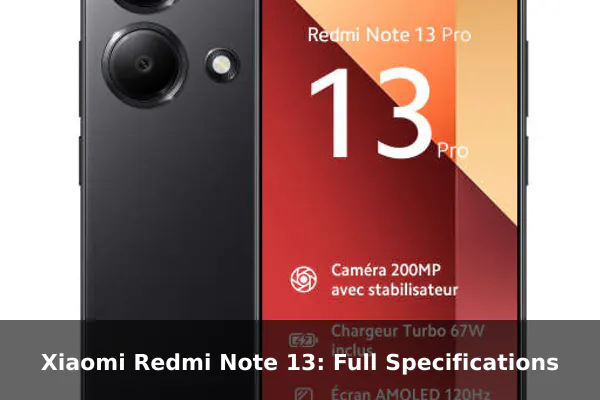
Connectivity is one of the cleaner parts of the package. The international model lists wide 4G and 5G band coverage, while the India model has a more focused band set for that market. Wi-Fi ac dual-band, Bluetooth 5.3, GPS and GLONASS positioning, USB Type-C 2.0 with OTG, infrared, and market-dependent NFC are included. The 3.5 mm headphone jack also remains, joined by Hi-Res and Hi-Res wireless audio support. There is no FM radio, and the USB standard is basic rather than high-speed, but the essentials are well covered.

Who Should Buy It
The Redmi Note 13 is a good fit for buyers upgrading from an older 4G phone who want 5G, a smoother AMOLED display, expandable storage, and a capable main camera without paying for a Pro model. It also suits students, commuters, and media-heavy users who value a large screen, headphone jack, and decent speakers. It is less ideal for people who prioritize waterproofing, 4K video, stereo speakers, flagship gaming, or the longest battery life in the class.
References
Sources used for cross-checking include the official Xiaomi India Redmi Note 13 5G specifications, GSMArena specifications and lab data, and the supplied source catalog record from tampungspekhp.berkasdrive.com.
Conclusion
The Xiaomi Redmi Note 13 is strongest as an affordable 5G phone with a bright AMOLED display, generous storage options, practical extras, and a useful 108 MP main camera. Choose it if display quality and everyday balance matter more than 4K video, premium materials, or class-leading battery endurance.
