
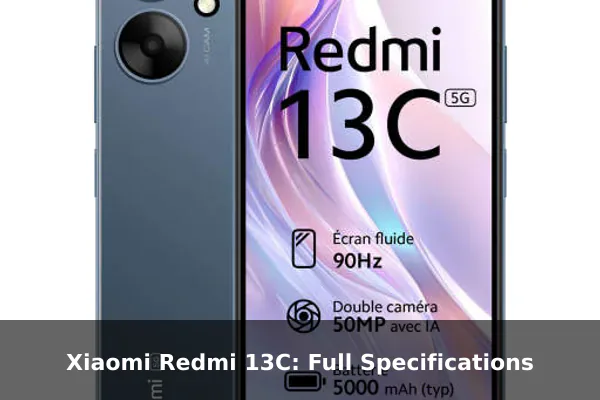
The Xiaomi Redmi 13C is a budget LTE smartphone built around a large 6.74-inch display, a 5000 mAh battery, expandable storage, and a 50 MP main camera. It sits in Xiaomi’s practical Redmi line, where everyday reliability matters more than flagship extras.
Announced and released on November 10, 2023, the Redmi 13C is best understood as an affordable Android phone for browsing, messaging, video streaming, light gaming, and dual-SIM use. Its strongest appeal is not one headline feature, but the way it combines a 90Hz screen, microSD support, USB-C, NFC availability in selected markets, and a familiar 3.5mm headphone jack.
Full Specifications
Network
| Technology: | GSM / HSPA / LTE |
| 2G bands: | GSM 850 / 900 / 1800 / 1900 |
| 3G bands: | HSDPA 850 / 900 / 2100 |
| 4G bands: | 1, 3, 5, 7, 8, 20, 28, 38, 40, 41 |
| Speed: | HSPA, LTE |
Launch
| Announced: | 2023, November 10 |
| Status: | Available. Released 2023, November 10 |
Body
| Dimensions: | 168 x 78 x 8.1 mm (6.61 x 3.07 x 0.32 in) |
| Weight: | 192 g (6.77 oz) |
| SIM: | Nano-SIM + Nano-SIM |
Display
| Type: | IPS LCD, 90Hz, 450 nits (typ), 600 nits (HBM) |
| Size: | 6.74 inches, 109.7 cm2 (~83.7% screen-to-body ratio) |
| Resolution: | 720 x 1600 pixels, 20:9 ratio (~260 ppi density) |
| Protection: | Corning Gorilla Glass |
Platform
| OS: | Android 13, MIUI 14 |
| Chipset: | Mediatek MT6769Z Helio G85 (12 nm) |
| CPU: | Octa-core (2×2.0 GHz Cortex-A75 & 6×1.8 GHz Cortex-A55) |
| GPU: | Mali-G52 MC2 |
Memory
| Card slot: | microSDXC (dedicated slot) |
| Internal: | 128GB 4GB RAM, 128GB 6GB RAM, 128GB 8GB RAM, 256GB 4GB RAM, 256GB 8GB RAM |
| eMMC 5.1 |
Main Camera
| Dual: | 50 MP, f/1.8, 28mm (wide), PDAF 2 MP, f/2.4, (macro) 0.08 MP (auxiliary lens) |
| Features: | LED flash, HDR |
| Video: | 1080p@30fps |
Selfie camera
| Single: | 8 MP, f/2.0 |
| Features: | HDR |
| Video: | 1080p@30fps |
Sound
| Loudspeaker: | Yes |
| 3.5mm jack: | Yes |
Comms
| WLAN: | Wi-Fi 802.11 a/b/g/n/ac, dual-band |
| Bluetooth: | 5.3, A2DP, LE |
| Positioning: | GPS, GLONASS, GALILEO, BDS |
| NFC: | Yes (market/region dependent) |
| Radio: | FM radio |
| USB: | USB Type-C 2.0 |
Features
| Sensors: | Fingerprint (side-mounted), accelerometer, compass |
| Virtual proximity sensing |
Battery
| Type: | Li-Po 5000 mAh |
| Charging: | 18W wired, PD |
Misc
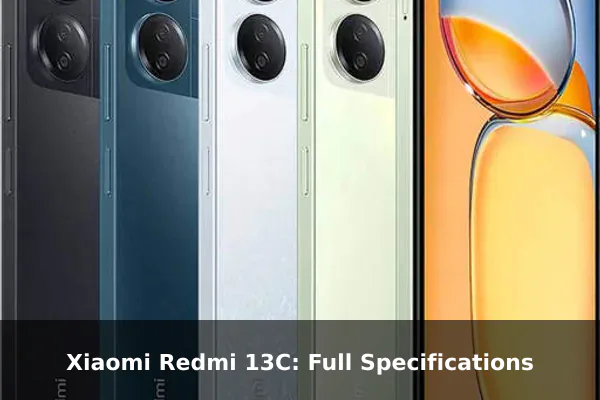
| Colors: | Midnight Black, Navy Blue, Glacier White, Clover Green |
| Models: | 23100RN82L, 23106RN0DA, 23108RN04Y, 2311DRN14I |
| SAR EU: | 0.98 W/kg (head) 0.99 W/kg (body) |
| Price: | € 111.90 / $ 149.99 / £ 104.99 |
Price and Availability
The Xiaomi Redmi 13C offers a compelling combination of features and performance. While the base price is around €112, the actual cost may vary depending on your location and retailer. Below, you’ll find the approximate price of the Xiaomi Redmi 13C converted into various currencies. Please note that these are estimates based on recent exchange rates as of October 4, 2026 and may not reflect the exact price you’ll find at a retailer.
- United States: $126
- Japan: ¥19,938
- United Kingdom: £95
- Australia: A$181
- Canada: C$179
- Taiwan: NT$4,016
- Denmark: kr837
- Saudi Arabia: ﷼472
- South Korea: ₩169,985
- Germany: €112
- Brazil: R$657
- Vietnam: ₫3.272.047
- Kenya: KSh 16,573
- India: ₹12,126
- Indonesia: Rp 2.250.367
- Nigeria: ₦172,332
- Pakistan: ₨34,900
- Philippines: ₱7,874
- Bangladesh: ৳১৫,৬৭৬
Value Position
The Redmi 13C targets buyers who want a low-cost phone without giving up the essentials that still matter in daily use. Its raw pricing data places it in the entry-level segment, and the feature mix reflects that clearly: LTE instead of 5G, eMMC 5.1 storage instead of faster UFS storage, and an HD+ display rather than a sharper Full HD+ panel. That said, Xiaomi includes several practical upgrades that help the phone feel less bare-bones, including a 90Hz refresh rate, a large battery, a dedicated microSDXC slot, and a USB Type-C port.
Compared with many older budget phones, the Redmi 13C feels more modern because it does not rely on a tiny display, outdated charging connector, or very limited storage tiers. The presence of 128GB and 256GB variants is important for buyers who keep photos, apps, offline music, and messaging media on the device. The best value configuration will usually be one with at least 6GB RAM, because Android 13 and MIUI 14 can feel more comfortable with extra memory during multitasking.
Design And Build
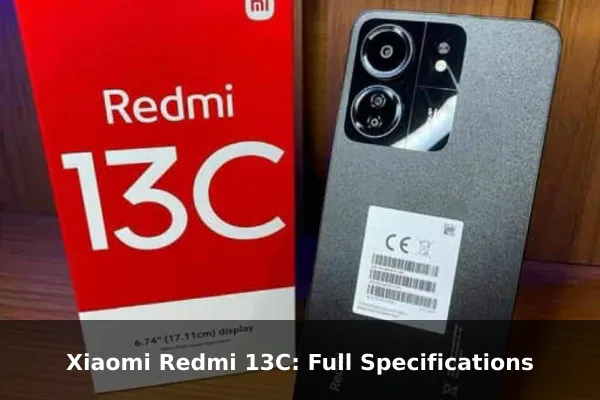
At 168 x 78 x 8.1 mm and 192 g, the Xiaomi Redmi 13C is a large phone, but not unusually heavy for a device with a 6.74-inch screen and 5000 mAh battery. The shape is aimed at mainstream use: big enough for reading and video, slim enough to avoid feeling bulky, and simple enough to fit the budget category. The available Midnight Black, Navy Blue, Glacier White, and Clover Green finishes give it a wider personality range than many entry-level phones, especially for users who prefer a lighter or brighter color.
The side-mounted fingerprint sensor is a sensible choice at this price. It keeps unlocking fast and familiar without depending on an in-display scanner. Dual Nano-SIM support also makes the phone practical for users who separate personal and work lines, travel between networks, or manage two local carriers.
Display Experience
The 6.74-inch IPS LCD is one of the Redmi 13C’s defining features. Its 90Hz refresh rate can make scrolling through menus, social feeds, and web pages feel smoother than a basic 60Hz panel. The 450 nits typical brightness and 600 nits high-brightness mode are adequate for routine indoor use and usable outdoor visibility, though this is still not a premium sunlight display.
The main compromise is resolution. At 720 x 1600 pixels and around 260 ppi, the panel is tuned for battery life and affordability rather than maximum sharpness. Text, icons, and video are perfectly serviceable for casual use, but users coming from a Full HD+ phone may notice softer fine detail. Corning Gorilla Glass protection is a welcome addition because budget phones often face rough daily handling.
Performance And Storage
The Mediatek Helio G85 gives the Redmi 13C enough power for everyday Android tasks, including messaging, video playback, social apps, navigation, banking apps, and light games. Its octa-core CPU combines two Cortex-A75 performance cores with six Cortex-A55 efficiency cores, while the Mali-G52 MC2 GPU handles graphics. This is not a chipset for demanding modern 3D gaming at high settings, but it remains a reasonable fit for an affordable LTE phone.
Storage is where Xiaomi gives buyers useful flexibility. The phone is listed with 128GB or 256GB internal storage and RAM options ranging from 4GB to 8GB, depending on the market and configuration. Because the storage type is eMMC 5.1, app installation and large file transfers will not feel as quick as phones with UFS storage. For smoother long-term use, the 128GB/6GB RAM or 256GB/8GB RAM variants are the more balanced picks.
Camera Expectations
The rear camera system is led by a 50 MP wide camera with PDAF, joined by a 2 MP macro camera and a 0.08 MP auxiliary lens. In practical terms, the main 50 MP camera is the part that matters most. It should be the default choice for everyday photos, including daylight shots, documents, casual portraits, and social media images. HDR and LED flash help in mixed lighting, but expectations should stay realistic because this is still a budget camera system.
The macro camera is more of an occasional tool than a reason to buy the phone. It can be used for close-up experiments, but its low resolution limits detail. Video recording tops out at 1080p at 30fps on both the rear and front cameras, which is fine for simple clips and video calls but not aimed at creators who need 4K, advanced stabilization, or high-frame-rate recording.
Battery And Charging
The 5000 mAh battery is one of the Redmi 13C’s strongest everyday advantages. Combined with an efficient LTE chipset and HD+ display resolution, it should suit users who need a phone that can last through messaging, calls, browsing, maps, and streaming without constant charging anxiety. Heavy gaming, hotspot use, and maximum brightness will drain it faster, but the capacity is well matched to the phone’s role.
Charging is rated at 18W wired with USB Power Delivery support. That is useful, but not especially fast by current Xiaomi standards. Buyers should expect convenient overnight or top-up charging rather than rapid flagship-style refills. The important point is that the phone uses USB Type-C, which makes cable compatibility easier than older microUSB budget devices.
Software And Daily Usability
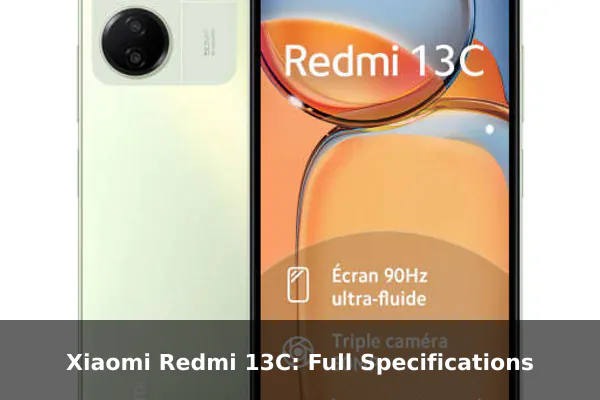
The Redmi 13C ships with Android 13 and MIUI 14. MIUI is feature-rich, with many customization options, Xiaomi utilities, and region-dependent apps and services. On an entry-level phone, the experience will depend partly on the RAM variant chosen and how many background apps are active. Users who want the cleanest experience may need to spend a little time adjusting notifications, uninstalling optional apps where allowed, and managing storage.
Daily usability is helped by several small but important features. The phone includes a loudspeaker, a 3.5mm headphone jack, FM radio, a side fingerprint reader, compass, accelerometer, and virtual proximity sensing. These details make it feel like a complete practical phone rather than a stripped-down backup device.
Connectivity And Network Support
The Redmi 13C is a 4G LTE phone, with GSM, HSPA, and LTE support. Its listed LTE bands include 1, 3, 5, 7, 8, 20, 28, 38, 40, and 41, giving it broad compatibility in many regions, though buyers should still check local carrier band support before purchase. There is no 5G, so anyone planning to keep a phone for several years in a 5G-focused market should consider that limitation carefully.
Wireless connectivity is solid for the price, with dual-band Wi-Fi 802.11 a/b/g/n/ac, Bluetooth 5.3, GPS, GLONASS, GALILEO, and BDS positioning. NFC is listed as market or region dependent, which is important: buyers who need contactless payments should verify the exact regional model before ordering.
Who Should Buy It
The Xiaomi Redmi 13C makes the most sense for users who want a large-screen Android phone at a low price and care more about battery life, storage, and basic reliability than 5G or premium camera features. It is suitable for students, first-time smartphone buyers, secondary-phone users, rideshare or delivery app use, and anyone who mainly uses communication apps, web browsing, YouTube, maps, and casual photography.
It is less suitable for users who want crisp Full HD+ resolution, strong gaming performance, advanced video features, stereo speakers, or long-term 5G readiness. In Xiaomi’s wider catalog, it is a practical budget choice rather than a performance-focused Redmi Note alternative.
References
References used for verification: Xiaomi Redmi 13C official specifications; Xiaomi UK Redmi 13C specifications; source catalog listing.
Conclusion
The Xiaomi Redmi 13C is a straightforward budget LTE phone with a big 90Hz display, 5000 mAh battery, expandable storage, USB-C, and a useful 50 MP main camera. Its HD+ resolution, eMMC storage, and lack of 5G are clear limits, but the overall package is sensible for the price. Recommended for buyers who want an affordable everyday Xiaomi phone with strong basics and minimal fuss.
