
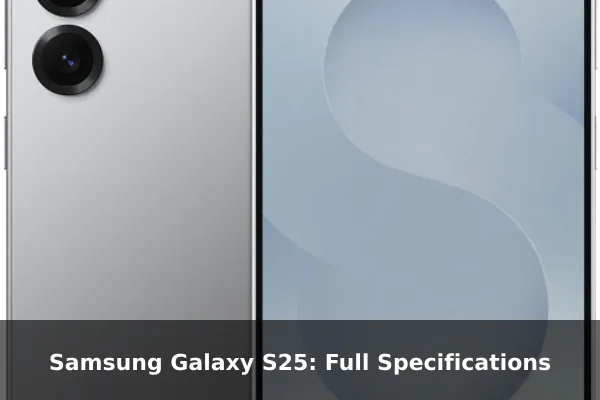
The Samsung Galaxy S25 is the compact flagship in Samsung’s 2025 S-series lineup, built for buyers who want high-end performance without stepping up to a large-screen Ultra model. It combines a 6.2-inch Dynamic LTPO AMOLED 2X display, Snapdragon 8 Elite hardware, a triple rear camera system, and long software support in a body that remains easy to hold.
This article focuses on what the Galaxy S25 means in practical use: value, portability, display quality, processing power, cameras, battery behavior, software longevity, and connectivity. The full specifications table is handled separately, so the sections below explain the phone’s strengths, trade-offs, and best-fit buyers.
Full Specifications
Network
| Technology: | GSM / CDMA / HSPA / EVDO / LTE / 5G |
| 2G bands: | GSM 850 / 900 / 1800 / 1900 |
| CDMA 800 / 1900 & TD-SCDMA | |
| 3G bands: | HSDPA 850 / 900 / 1700(AWS) / 1900 / 2100 |
| CDMA2000 1xEV-DO | |
| 4G bands: | 1, 2, 3, 4, 5, 7, 8, 12, 13, 17, 18, 19, 20, 25, 26, 28, 32, 38, 39, 40, 41, 66 – International |
| 1, 2, 3, 4, 5, 7, 8, 12, 13, 14, 18, 19, 20, 25, 26, 28, 29, 30, 38, 39, 40, 41, 48, 66, 71 – USA unlocked | |
| 5G bands: | 1, 2, 3, 5, 7, 8, 12, 20, 25, 26, 28, 38, 40, 41, 66, 75, 77, 78 SA/NSA/Sub6 – International |
| 1, 2, 5, 7, 25, 28, 41, 66, 71, 77, 78, 257, 258, 260, 261 SA/NSA/Sub6/mmWave – USA unlocked | |
| Speed: | HSPA, LTE (up to 7CA), 5G |
Launch
| Announced: | 2025, January 22 |
| Status: | Available. Released 2025, February 03 |
Body
| Dimensions: | 146.9 x 70.5 x 7.2 mm (5.78 x 2.78 x 0.28 in) |
| Weight: | 162 g (5.71 oz) |
| Build: | Glass front (Gorilla Glass Victus 2), glass back (Gorilla Glass Victus 2), aluminum frame |
| SIM: | Nano-SIM + Nano-SIM + eSIM + eSIM (max 2 at a time) – INT Nano-SIM + eSIM + eSIM (max 2 at a time) – USA Nano-SIM + Nano-SIM – CN |
| IP68 dust tight and water resistant (immersible up to 1.5m for 30 min) Armor aluminum 2 frame |
Display
| Type: | Dynamic LTPO AMOLED 2X, 120Hz, 480Hz PWM, HDR10+, 2600 nits (peak) |
| Size: | 6.2 inches, 94.4 cm2 (~91.1% screen-to-body ratio) |
| Resolution: | 1080 x 2340 pixels, 19.5:9 ratio (~416 ppi density) |
| Protection: | Corning Gorilla Glass Victus 2, Mohs level 5 |
Platform
| OS: | Android 15, up to 7 major Android upgrades, One UI 7 |
| Chipset: | Qualcomm SM8750-AC Snapdragon 8 Elite (3 nm) |
| CPU: | Octa-core (2×4.47 GHz Oryon V2 Phoenix L + 6×3.53 GHz Oryon V2 Phoenix M) |
| GPU: | Adreno 830 (1200 MHz) |
Memory
| Card slot: | No |
| Internal: | 128GB 12GB RAM, 256GB 12GB RAM, 512GB 12GB RAM |
| UFS 4.0 |
Main Camera
| Triple: | 50 MP, f/1.8, 24mm (wide), 1/1.56″, 1.0µm, dual pixel PDAF, OIS 10 MP, f/2.4, 67mm (telephoto), 1/3.94″, 1.0µm, PDAF, OIS, 3x optical zoom 12 MP, f/2.2, 13mm, 120˚ (ultrawide), 1/2.55″ 1.4µm, Super Steady video |
| Features: | Best Face, LED flash, auto-HDR, panorama |
| Video: | 8K@24/30fps, 4K@30/60fps, 1080p@30/60/120/240fps, 10-bit HDR, HDR10+, stereo sound rec., gyro-EIS |
Selfie camera
| Single: | 12 MP, f/2.2, 26mm (wide), 1/3.2″, 1.12µm, dual pixel PDAF |
| Features: | HDR, HDR10+ |
| Video: | 4K@30/60fps, 1080p@30fps |
Sound
| Loudspeaker: | Yes, with stereo speakers |
| 3.5mm jack: | No |
| 32-bit/384kHz audio Tuned by AKG |
Comms
| WLAN: | Wi-Fi 802.11 a/b/g/n/ac/6e/7, tri-band, Wi-Fi Direct |
| Bluetooth: | 5.4, A2DP, LE |
| Positioning: | GPS, GLONASS, BDS, GALILEO, QZSS |
| NFC: | Yes |
| Radio: | No |
| USB: | USB Type-C 3.2, DisplayPort 1.2, OTG |
Features
| Sensors: | Fingerprint (under display, ultrasonic), accelerometer, gyro, proximity, compass, barometer |
| Samsung DeX, Samsung Wireless DeX (desktop experience support) Circle to Search |
Battery
| Type: | Li-Ion 4000 mAh |
| Charging: | 25W wired, PD3.0, 50% in 30 min 15W wireless (Qi2 Ready) 4.5W reverse wireless |
Misc
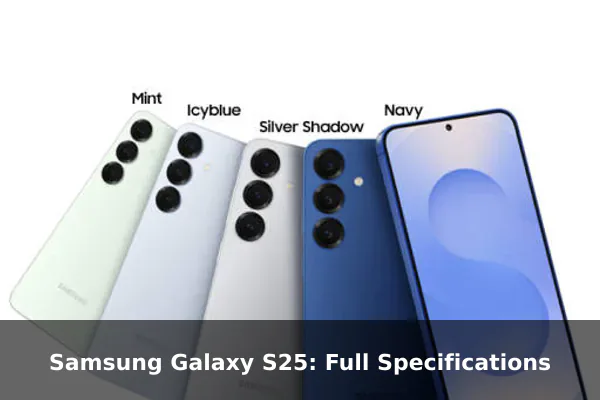
| Colors: | Icy Blue, Mint, Navy, Silver Shadow, Pink Gold, Coral Red, Blue Black |
| Models: | SM-S931B, SM-S931B/DS, SM-S931U, SM-S931U1, SM-S931W, SM-S931N, SM-S9310, SM-S931E, SM-S931E/DS |
| SAR: | 1.13 W/kg (head) 0.92 W/kg (body) |
| SAR EU: | 1.29 W/kg (head) 1.36 W/kg (body) |
| Price: | € 550.00 / $ 474.45 / £ 517.00 / ₹ 63,999 |
Our Tests
| Performance: | AnTuTu: 2193701 (v10) GeekBench: 10050 (v6) 3DMark: 6755 (Wild Life Extreme) |
| Display: | 1395 nits max brightness (measured) |
| Loudspeaker: | -26.1 LUFS (Good) |
| Battery: | Active use score 13:09h |
EU LABEL
| Energy: | Class B |
| Battery: | 37:16h endurance, 2000 cycles |
| Free fall: | Class A (270 falls) |
| Repairability: | Class C |
Price and Availability
The Samsung Galaxy S25 offers a compelling combination of features and performance. While the base price is around €550, the actual cost may vary depending on your location and retailer. Below, you’ll find the approximate price of the Samsung Galaxy S25 converted into various currencies. Please note that these are estimates based on recent exchange rates as of September 26, 2026 and may not reflect the exact price you’ll find at a retailer.
- United States: $627
- Japan: ¥98,747
- United Kingdom: £473
- Australia: A$892
- Canada: C$886
- Taiwan: NT$19,905
- Denmark: kr4.112
- Saudi Arabia: ﷼2,351
- South Korea: ₩851,997
- Germany: €550
- Brazil: R$3.253
- Vietnam: ₫16.276.978
- Kenya: KSh 81,444
- India: ₹60,030
- Indonesia: Rp 11.201.691
- Nigeria: ₦855,803
- Pakistan: ₨173,529
- Philippines: ₱39,214
- Bangladesh: ৳৭৭,১২৭
Value Positioning
The Galaxy S25 is best understood as Samsung’s compact premium option rather than a budget flagship substitute. It carries many of the core features expected from the larger S25 models, including the Snapdragon 8 Elite platform, 12GB of RAM, Galaxy AI features, IP68 protection, UFS 4.0 storage, stereo speakers, and a polished aluminum-and-glass build.
Its value depends strongly on local pricing and storage choice. The 128GB version keeps the entry point lower, but the lack of a microSD card means the 256GB or 512GB models are safer for users who record 4K or 8K video, store offline media, or keep a phone for several years. For buyers who want Samsung’s flagship experience in the smallest current S-series body, the S25 has a clear role.
Design and Durability
The Galaxy S25 keeps the compact flagship formula tight: 146.9 mm tall, 70.5 mm wide, 7.2 mm thin, and 162 g in weight. That makes it notably easier to pocket and operate with one hand than many modern premium phones, while still using strong materials such as Gorilla Glass Victus 2 on the front and back plus an Armor Aluminum 2 frame.
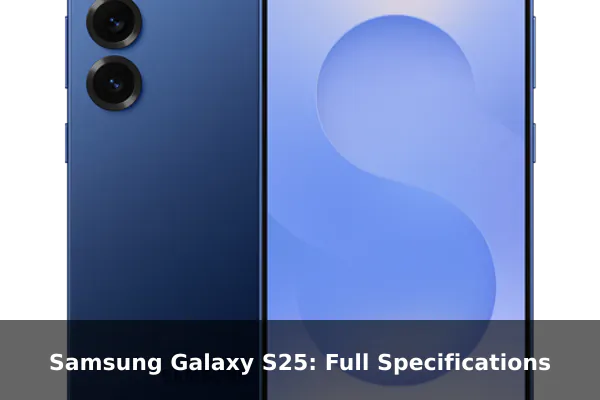
IP68 dust and water resistance adds reassurance for daily use, although it should still be treated as protection against accidents rather than an invitation to use the phone underwater. The color range is also wider than many business-like flagships, with Icy Blue, Mint, Navy, Silver Shadow, Pink Gold, Coral Red, and Blue Black giving the phone a less anonymous personality.
Display Experience
The 6.2-inch Dynamic LTPO AMOLED 2X panel is one of the Galaxy S25’s defining strengths. It supports a 120Hz refresh rate, HDR10+, a sharp 1080 x 2340 resolution, and a listed peak brightness of 2600 nits. The measured 1395-nit maximum brightness also points to strong outdoor readability in realistic use.
Because the display is smaller than Plus and Ultra-class phones, it is less ideal for spreadsheet-heavy work, split-screen multitasking, or extended video watching. However, the compact size improves handling, and the roughly 416 ppi density keeps text and interface elements crisp. The 480Hz PWM detail may also matter to readers who compare OLED dimming behavior closely.
Performance and Storage
The Snapdragon 8 Elite for Galaxy-class hardware gives the Galaxy S25 genuine flagship headroom. The listed CPU configuration pairs two high-clock Oryon V2 Phoenix L cores with six Oryon V2 Phoenix M cores, while the Adreno 830 GPU handles demanding graphics work. Reported benchmark results, including over 2.19 million in AnTuTu v10 and 10050 in GeekBench v6, put it firmly in top-tier Android territory.
All listed storage variants include 12GB of RAM, which is useful for multitasking, camera processing, Samsung DeX, and AI-assisted features. UFS 4.0 storage is another important detail because it helps app loading, file transfers, and large media handling feel fast. The only obvious limitation is expandability: there is no card slot, so storage should be chosen carefully at purchase.
Camera Setup
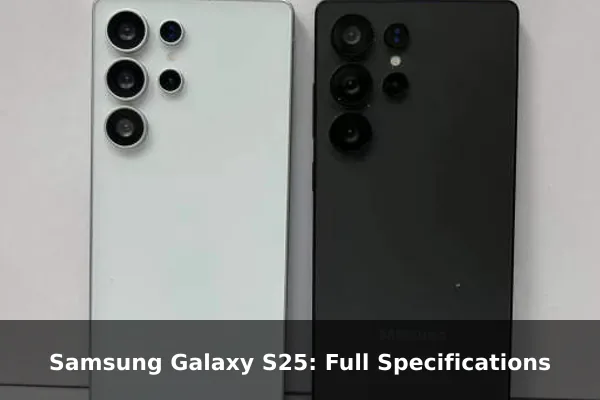
The rear camera system is practical rather than experimental. The 50MP main camera has optical image stabilization and dual pixel phase detection autofocus, the 10MP telephoto camera provides 3x optical zoom with OIS, and the 12MP ultrawide camera covers 120-degree scenes with Super Steady video support. This gives the S25 a more complete camera range than phones that rely only on wide and ultrawide lenses.
Video capability is particularly strong for a compact phone. The Galaxy S25 supports 8K recording at 24 or 30 fps, 4K at up to 60 fps, high-frame-rate 1080p options, 10-bit HDR, HDR10+, stereo sound recording, and gyro-EIS. The 12MP selfie camera also supports dual pixel autofocus and 4K video, which is useful for calls, social video, and creator-style front-camera recording.
Battery and Charging
The 4000 mAh battery is modest by large-phone standards, but it fits the S25’s compact chassis. The active use score of 13:09h suggests respectable endurance for mixed daily use, while the EU label data lists 37:16h endurance and 2000 cycles. In plain terms, this should suit a normal day for many users, though heavy gaming, navigation, camera recording, and hotspot use will still drain it faster.
Charging is the conservative part of the package. The phone supports 25W wired charging with PD3.0, 15W wireless charging, and 4.5W reverse wireless charging. The quoted 50 percent in 30 minutes is useful, but buyers coming from brands with much faster wired charging may find Samsung’s approach restrained.
Software and Long-Term Support
The Galaxy S25 ships with Android 15 and One UI 7, with support for up to seven major Android upgrades. That long update window is one of the biggest reasons to consider this phone over cheaper high-performance alternatives, especially for people who keep a device well beyond the first two or three years.
Samsung DeX and Wireless DeX also help the phone stand out for productivity. With the right display and accessories, the S25 can work as a desktop-style device for documents, browsing, messaging, and light multitasking. Circle to Search and Samsung’s Galaxy AI direction add convenience, though buyers should remember that AI feature availability can vary by region, language, account status, and future policy changes.
Connectivity and Everyday Extras
The Galaxy S25 is well equipped for modern networks, with extensive LTE support and 5G configurations that differ between international and USA unlocked models. The USA unlocked version includes mmWave bands, while the international version focuses on Sub-6 5G. This distinction matters for buyers importing devices or switching carriers.
Wireless features are equally complete: Wi-Fi 7, tri-band Wi-Fi, Bluetooth 5.4, NFC, broad satellite positioning support, USB Type-C 3.2, DisplayPort 1.2, and OTG. The stereo speakers are rated Good at -26.1 LUFS, and the phone supports 32-bit/384kHz audio tuned by AKG. There is no 3.5mm headphone jack, which is expected for this class but still worth noting.
Who Should Buy It?
The Galaxy S25 is best for buyers who want a premium Android phone that is fast, durable, camera-capable, and genuinely compact. It is especially appealing if you value Samsung’s long update policy, a bright OLED display, DeX support, and a polished feature set without moving to a large device.
It is less ideal if your priorities are the biggest screen, the longest possible battery life, the fastest charging, or Samsung’s most advanced camera hardware. In those cases, a Plus, Ultra, or camera-focused rival may be more suitable. For everyone else, the S25 is a rare small flagship that does not feel like a compromised side model.
Conclusion
The Samsung Galaxy S25 delivers flagship performance, a bright compact display, reliable cameras, strong connectivity, and unusually long software support in a slim 162 g body. Its charging speed and non-expandable storage are the main compromises, but the overall package is highly balanced. Recommended for buyers who want a compact premium Android phone with long-term value.
References
- Samsung Galaxy S25 Official Product Page – Official Samsung product page for Galaxy S25 and S25+ features, design, display, battery, AI features, availability notes, and model details.
- Samsung Mobile Press Galaxy S25 Tech Specs – Official Samsung media/specification page with detailed Galaxy S25 hardware specs including display, dimensions, cameras, memory, battery, charging, connectivity, and durability notes.
- Samsung Global Newsroom Galaxy S25 Series Announcement – Official launch announcement covering Galaxy S25 series features, Snapdragon 8 Elite for Galaxy, Galaxy AI, camera/software claims, colors, and update support.
- Samsung Support US Galaxy S25 Manuals and Downloads – Official Samsung support source for Galaxy S25 user manuals, downloads, firmware/software support, and model-specific documentation.
- Qualcomm Galaxy S25 Device Finder – Official Qualcomm device listing confirming the Galaxy S25 uses the Snapdragon 8 Elite Mobile Platform and related Qualcomm connectivity details.
